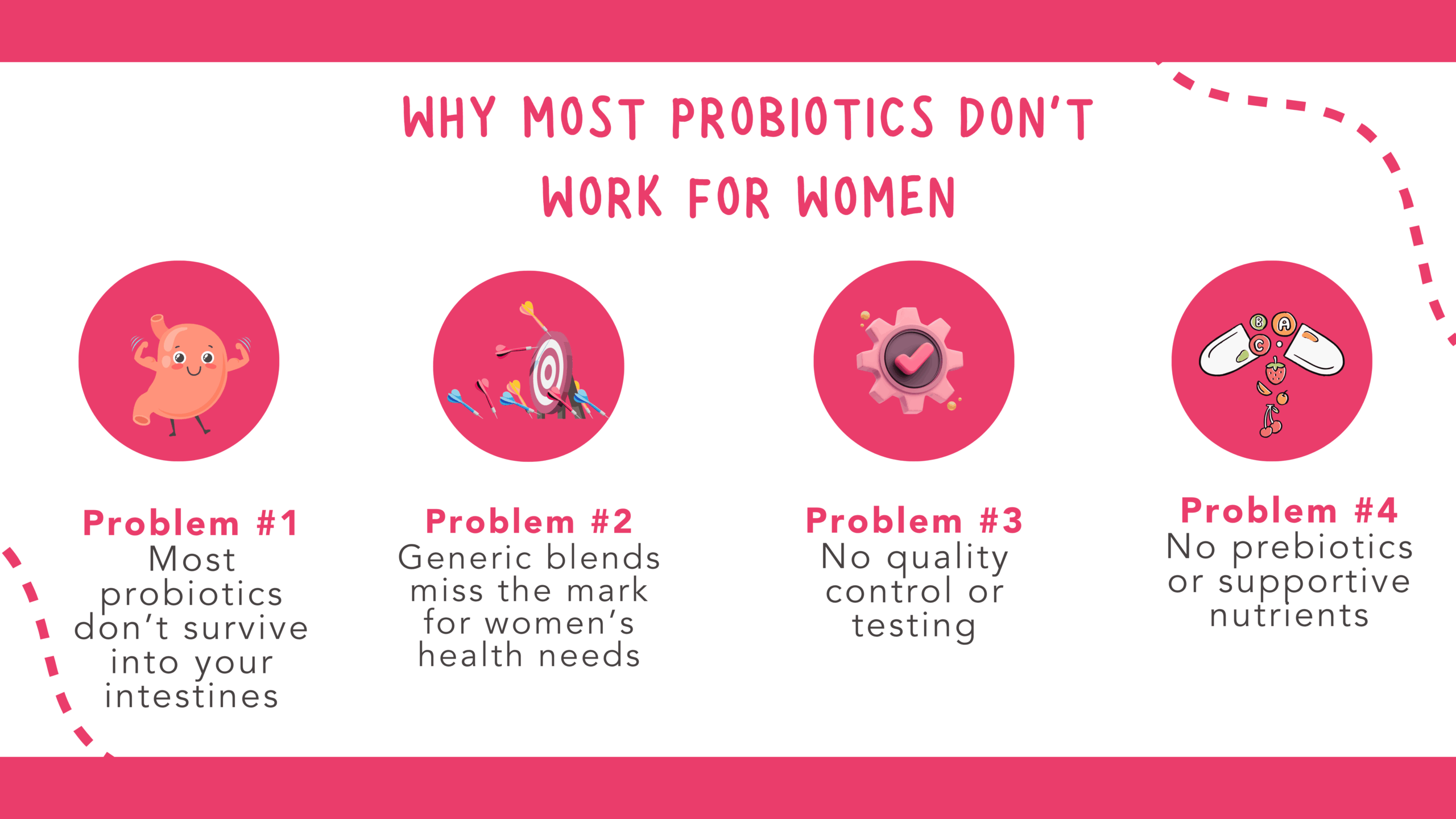
Most women waste money on probiotics that don't deliver results. Generic probiotic supplements lack the strain specificity and survival mechanisms needed to reach the gut and colonize effectively in women's bodies.
The problem starts at the store shelf. Many commercial probiotics use low-quality strains, incorrect dosages, or formulations that break down in stomach acid before reaching the intestines. Women's gut microbiomes differ from men's due to hormonal fluctuations, menstrual cycles, and reproductive health factors. Standard probiotic blends ignore these biological realities.
What actually works requires three things: targeted strains proven effective in women-specific research, sufficient CFU (colony-forming units) to survive digestion, and enteric coating to protect bacteria through the stomach. Look for clinical trials showing results in female subjects, not just animal studies or generic population data.
Probiotic effectiveness also depends on diet and lifestyle. Fermented foods like sauerkraut, kimchi, and yogurt with live cultures often outperform supplements because whole foods contain multiple beneficial strains plus prebiotics that feed existing gut bacteria.
Before buying another bottle, check the label for specific strain names (like Lactobacillus rhamnosus), viable CFU counts, third-party testing verification, and expiration dates. Consider consulting a gastroenterologist or registered dietitian who can recommend strains backed by evidence specific to your health concerns rather than relying on marketing claims.