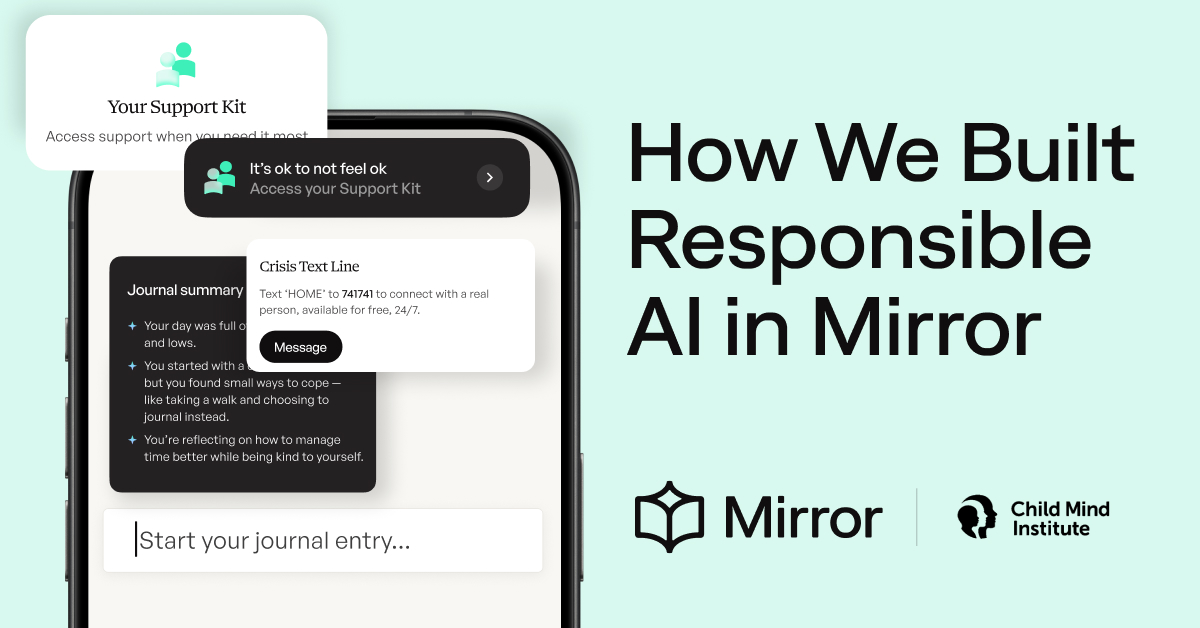
The Child Mind Institute released Mirror, a digital journaling app designed with a specific ethical framework in mind. Rather than positioning AI as a replacement for human connection, the developers built the tool to strengthen it.
Mirror's creators faced a fundamental question during development: how should an algorithm respond when young people share vulnerable thoughts? Their answer prioritizes pathways to real human support, not algorithmic substitutes. This approach reflects growing concern among child mental health experts about AI tools that promise therapy without licensed professionals behind them.
The app operates differently than confession-style platforms or AI chatbots that engage users in extended conversations. Instead, Mirror positions itself as a structured journaling companion that encourages reflection and helps users identify when they need actual clinical support. The technology identifies concerning patterns in entries and prompts users toward resources like their school counselor, therapist, or crisis hotlines.
This design philosophy stems from research showing that adolescents benefit most from digital tools that enhance human relationships rather than replace them. The American Academy of Pediatrics has warned against apps claiming to provide therapy without clinical oversight. The Child Mind Institute, a research organization focused on child mental health, built those guardrails directly into Mirror's architecture.
The developers also implemented transparency features. Young people using Mirror can understand what the AI is doing and why. This matters because teens are more likely to trust technology when they understand its limitations and purpose.
Mirror reflects a broader shift in how responsible organizations approach mental health technology for young people. Instead of maximizing user engagement or creating dependency, the app measures success by whether it connects kids to appropriate human care faster.
For parents, Mirror represents a tool that takes mental health seriously without overpromising what algorithms can do. It's available through the Child Mind Institute and functions alongside professional care, not instead of it.
WHY IT MATTERS: As AI mental health tools proliferate, Mirror demonstrates how developers can prioritize safety and human connection over