Parents often miss nonverbal learning disorder (NVLD) in young children because the condition looks different at each developmental stage. The Child Mind Institute reports that most kids with NVLD don't receive diagnosis until middle or high school, when academic and social demands expose gaps that earlier warning signs could have caught.
NVLD is a neurodevelopmental disorder, like autism and ADHD, meaning it's lifelong and present from birth. The disorder affects how children process nonverbal information. spatial reasoning, visual-spatial skills, and body awareness often lag behind verbal abilities. A child with NVLD might read fluently but struggle to understand a map, interpret facial expressions, or coordinate physical movements.
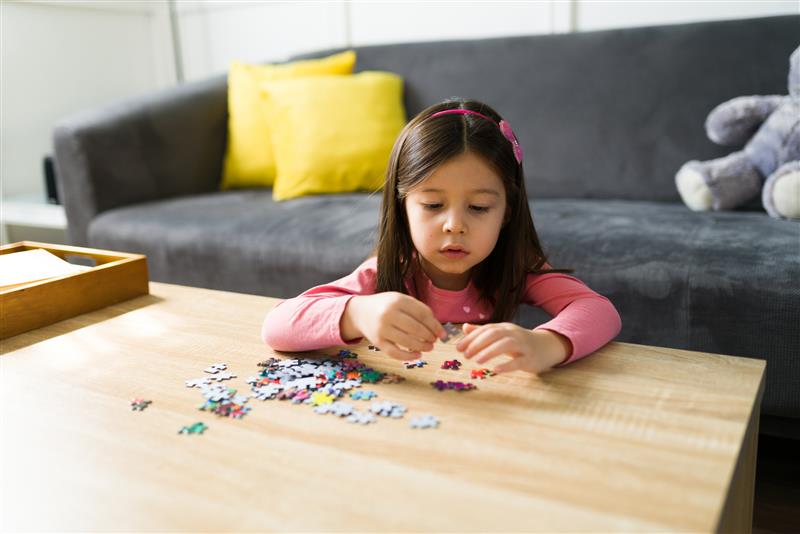
Early signs appear in preschool and kindergarten. Watch for children who seem clumsy, bump into things, or have trouble with fine motor skills like buttoning or cutting. They may struggle with puzzles or block building. Socially, they might miss social cues, stand too close to peers, or have difficulty reading the room during group play.
In elementary school, the pattern sharpens. Kids with NVLD typically excel at reading and memorization but falter in math word problems and visual-spatial reasoning. They may avoid sports and outdoor play. Organization becomes harder as assignments require multi-step planning. Social isolation can deepen as peers pick up on subtle social awkwardness the child doesn't recognize.
By middle school, academic pressure intensifies around subjects requiring visual-spatial thinking. Handwriting often deteriorates despite strong reading skills. Social struggles peak as peer relationships grow more complex and require reading nuanced social signals.
Early identification matters because it allows for intervention before academic and emotional gaps widen. Teachers and parents can implement supports for visual-spatial tasks, explicit social skills instruction, and accommodations for math word problems. Occupational therapy helps with motor coordination and spatial awareness. Psychoeduc