# Why Most Probiotics Don't Work for Women (And What Actually Does)
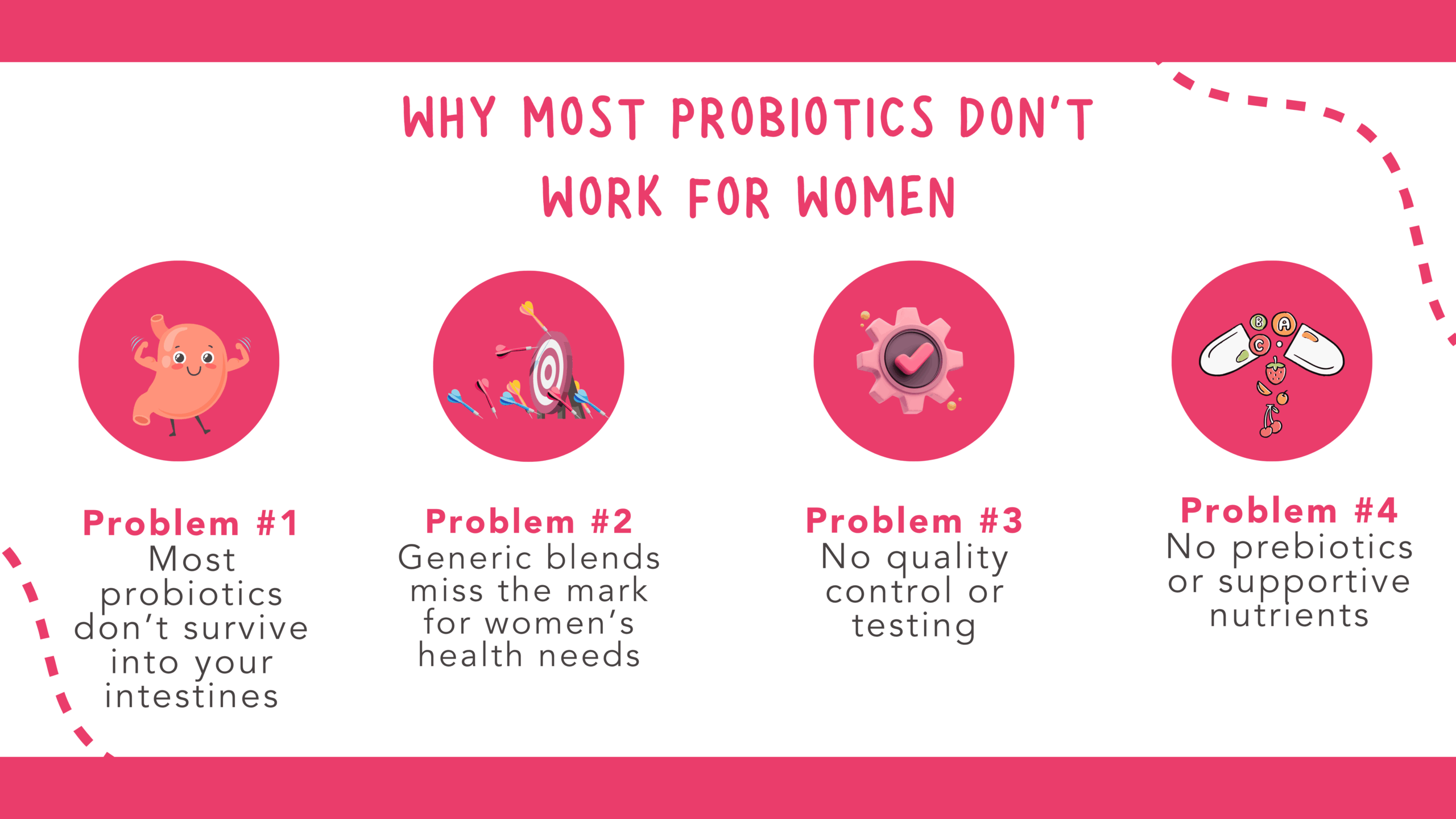
Women who take probiotics often see no real changes in digestion, skin, or mood, despite the marketing claims plastered on bottles. The reason is straightforward: most probiotics on store shelves aren't formulated for women's bodies.
Generic probiotic blends treat all users the same, but women have distinct microbiome needs shaped by hormonal fluctuations, menstrual cycles, and vaginal pH balance. Many over-the-counter probiotics use weak or unstable strains that die before reaching the gut. Others contain insufficient CFUs (colony-forming units) to make any difference. Some never survive stomach acid long enough to do anything useful.
What actually works requires specificity. Research shows that women benefit from targeted strains designed for female health. Lactobacillus crispatus and Lactobacillus gasseri have demonstrated benefits for vaginal health and digestive balance in women specifically. These strains need adequate CFU counts, typically 10 billion or higher, and enteric coating to protect them through stomach acid.
Quality matters enormously. Third-party tested products from established manufacturers beat bargain-bin options every time. Look for probiotics that specify their strain names, not just generic "Lactobacillus blend" labels. The difference between a $5 bottle and a $15 one often comes down to viability and potency.
Timing and storage also shift results. Taking probiotics with food improves survival rates. Keeping them refrigerated preserves potency longer than shelf-stable versions. Some women see results in two weeks; others need six to eight weeks for meaningful changes.
Probiotics work best alongside other gut-health practices: adequate fiber, consistent water intake, and stress management all support microbial balance. A dermatologist