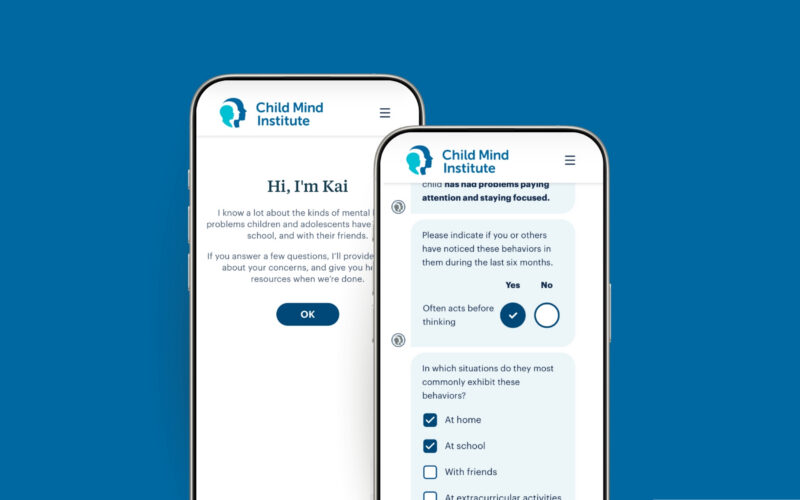
Parents searching for answers when their child shows troubling behaviors now have a new tool. The Child Mind Institute launched Ask Kai, a conversational symptom checker designed to help caregivers understand what might be happening with their child and connect them to appropriate support.
Ask Kai works by letting parents describe their child's behavior through conversation. The tool asks clarifying questions, much like talking with a healthcare provider, to help narrow down what could be causing concerns. Instead of offering diagnoses, Ask Kai provides information and directs families toward professional resources and next steps.
The need for this tool is real. Parents often feel stuck when noticing behavioral changes, emotional struggles, or developmental concerns. They may not know whether something warrants a doctor's visit, school evaluation, or mental health support. Ask Kai bridges that gap by organizing information and helping parents ask better questions.
The tool from Child Mind Institute, a respected nonprofit focused on children's mental health and learning disorders, reflects growing interest in accessible mental health information for families. Similar symptom checkers exist for adults, but Ask Kai specifically addresses the unique complexity of children's development. What looks like a problem at age four might be completely normal. What seems minor at eight could signal something needing attention.
Parents should understand what Ask Kai is not. It cannot diagnose conditions like ADHD, anxiety, depression, or learning disorders. It does not replace conversations with pediatricians, therapists, or school psychologists. Instead, it serves as a starting point, helping parents organize their observations and feel more prepared when seeking professional guidance.
For busy families juggling work and schedules, Ask Kai offers convenience. Parents can use it anytime, without waiting for appointments. For families uncertain where to begin, it reduces the confusion of choosing between different specialists and services.
The tool works best when parents provide honest, detailed information about what they're observing. Specifics matter