# How the Child Mind Institute Built Mirror, an AI Journaling App Designed for Teen Mental Health
The Child Mind Institute created Mirror, a digital journaling tool that uses AI responsibly to support young people's mental health. Rather than replacing human connection, the app's design philosophy centers on strengthening it.
Mirror prompts teens to explore their thoughts and feelings through guided journaling. The AI component works as a mirror, reflecting back what users write without judgment. The institute's developers faced a core ethical challenge: when vulnerable teens share intimate thoughts with an algorithm, how can technology facilitate—not replace—real human support?
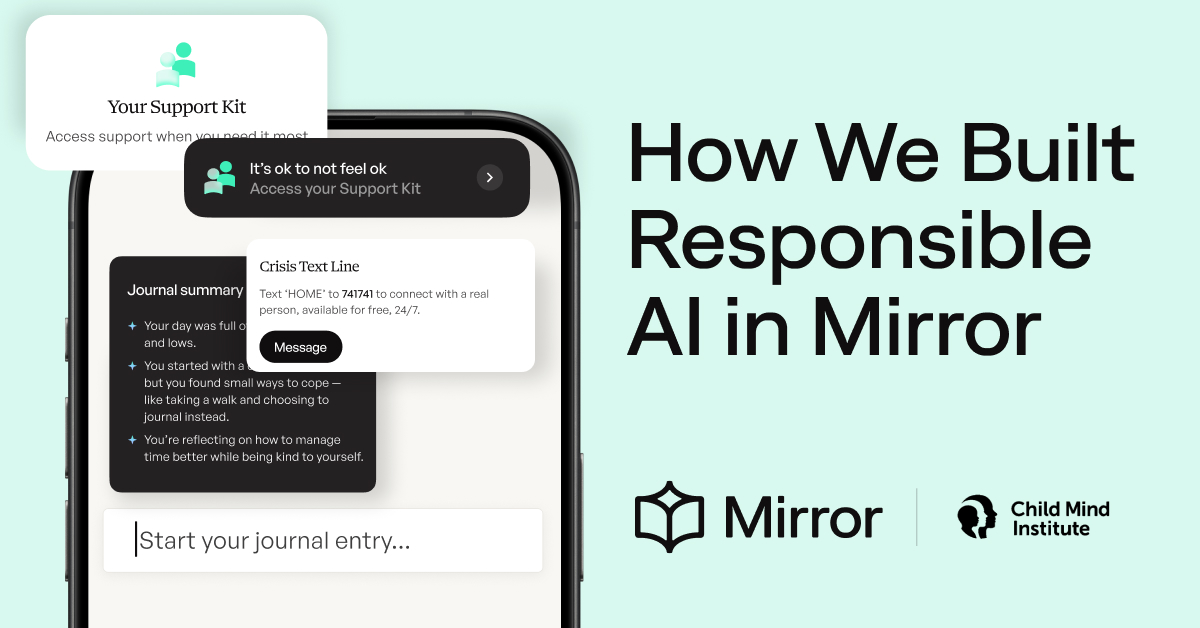
This question shaped every decision. The team built in safeguards to ensure the app never positions itself as a therapist substitute. Instead, Mirror encourages users to share insights with trusted adults, school counselors, or mental health professionals. The app flags concerning content and provides crisis resources when appropriate.
The Child Mind Institute, a research and treatment organization focused on child psychiatry and psychology, brought their clinical expertise to the project. Their approach reflects growing concern among mental health professionals about how young people use technology for emotional support. Many teens turn to digital tools before reaching out to adults, making the quality of that first algorithmic interaction genuinely important.
Mirror includes transparency features. Teens see exactly how the app uses their data and what happens to their entries. The institute avoided dark patterns, addictive design tactics, or attempts to maximize screen time. Sessions have natural endpoints rather than endless scrolling.
The team also considered developmental appropriateness. Mirror's language, tone, and prompts adapt to different age groups within the teen category. A 13-year-old's experience differs from a 17-year-old's, reflecting their distinct emotional and cognitive development.
Privacy protections run deep. The app encrypts user data and limits how information gets stored and shared. Parents can access their teen's journal only with