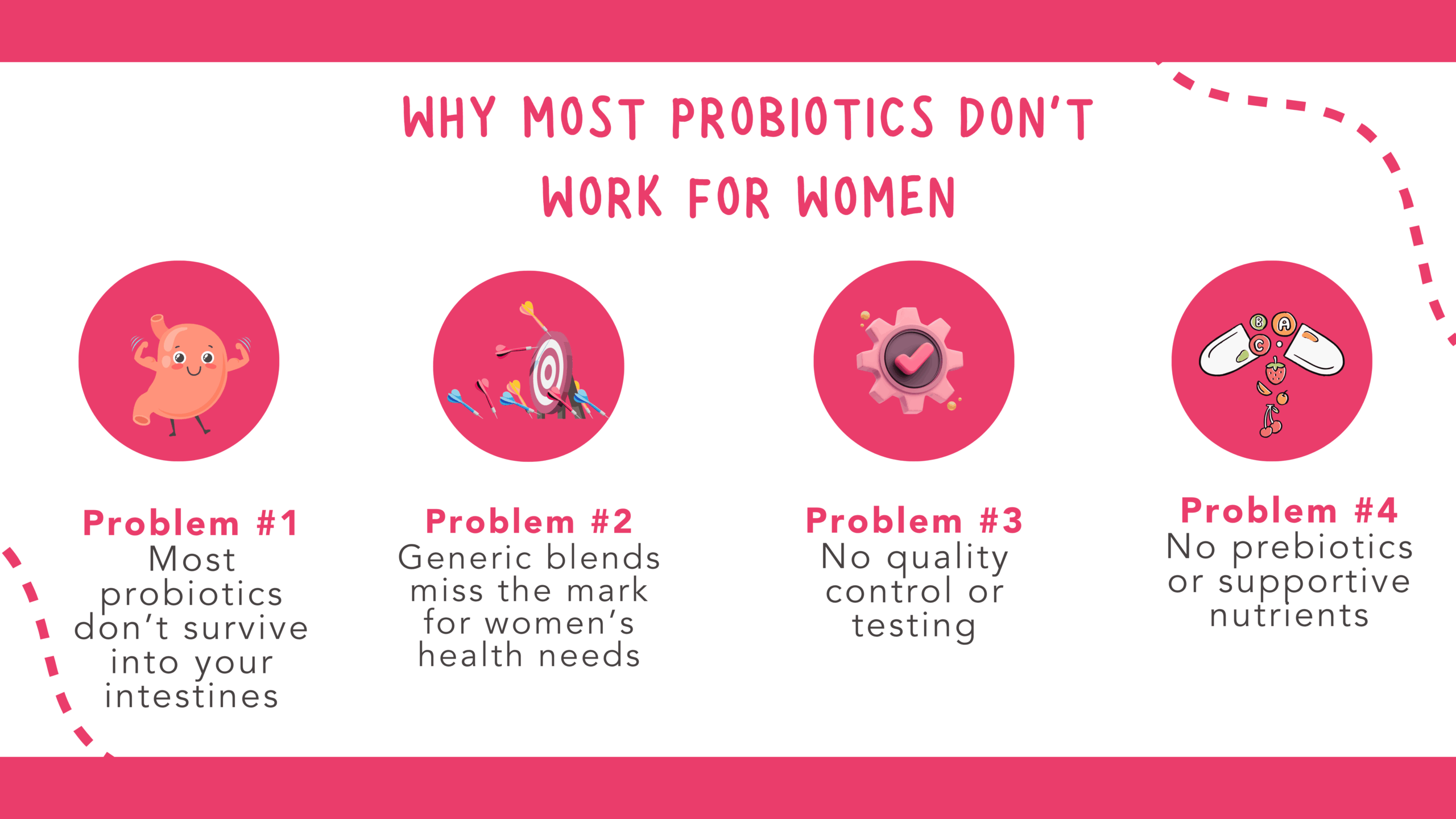
Most probiotics on the market fail to deliver results for women because manufacturers design them as generic formulas rather than tailored supplements. Many strains lack potency, don't survive stomach acid, or contain insufficient CFU counts to reach the gut alive.
Women's microbiomes differ from men's due to hormonal fluctuations, menstrual cycles, and unique vaginal flora. A one-size-fits-all probiotic cannot address these specific needs. Research shows that certain Lactobacillus and Bifidobacterium strains perform better for women's digestive and vaginal health, yet most commercial products contain low-quality versions or ineffective combinations.
Quality matters enormously. Third-party testing through organizations like NSF International or USP ensures products contain the strains and CFU counts listed on labels. Many drugstore probiotics lose 50-90 percent viability before expiration due to poor storage or manufacturing practices.
For women seeking results, look for probiotics with clinically studied strains. Lactobacillus rhamnosus GG and Bifidobacterium longum have solid evidence for digestive health. For vaginal health, Lactobacillus crispatus and Lactobacillus gasseri show promise in research. CFU counts between 10-50 billion work better than lower doses for most women.
Storage and delivery matter too. Shelf-stable formulas survive better than those requiring refrigeration during shipping. Enteric-coated capsules protect bacteria from stomach acid, improving colonization rates in the intestines.
Beyond supplements, fermented foods like yogurt, kefir, sauerkraut, and kimchi provide live cultures naturally. Women should also consider prebiotic foods like garlic, onions, and fiber to feed existing beneficial bacteria.
Start with one probiotic strain