# Finding Answers When Your Child Is Struggling: Introducing Ask Kai
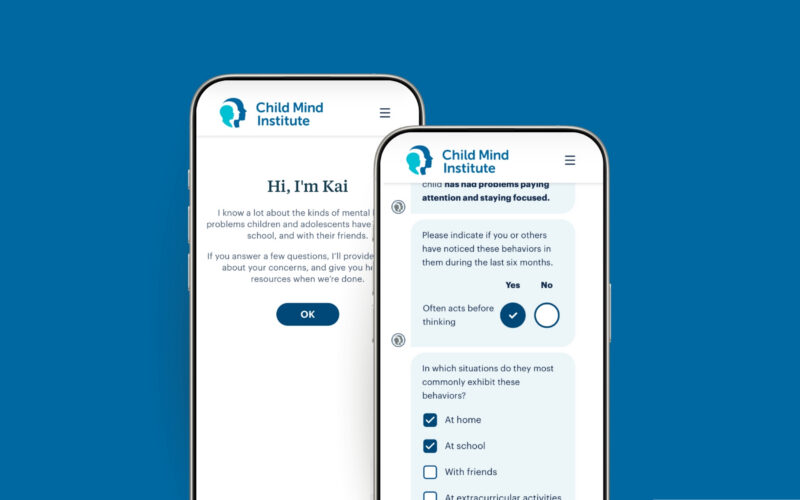
The Child Mind Institute has launched Ask Kai, a conversational symptom checker designed to help parents and caregivers decode their child's behavior and find appropriate support resources.
Parents often struggle to understand when their child's behavior signals a real concern versus typical development. A child who refuses school might have anxiety, sensory issues, or social stress. Excessive worry could reflect age-appropriate nervousness or generalized anxiety disorder. These distinctions matter because they point toward different solutions.
Ask Kai works like a digital guide. Parents describe what they're observing in their child, then interact with the tool in a conversational format. The tool asks clarifying questions about the child's age, behavior patterns, duration of symptoms, and impact on daily life. Based on these responses, Ask Kai offers information about potential explanations and directs families toward relevant resources from the Child Mind Institute and beyond.
The tool doesn't diagnose. Instead, it functions as a starting point for understanding. Parents might discover their child's behavior aligns with ADHD, anxiety, autism, or simple developmental variation. They learn what questions to ask their pediatrician or therapist. They find resources explaining specific conditions, coping strategies, and when professional evaluation makes sense.
This addresses a real gap in parenting information. Most parents turn to Google when concerned about their child's behavior, often landing on websites that catalog worst-case scenarios. Ask Kai structures the conversation differently. It mirrors how mental health professionals actually assess concerns, moving from observation to context to impact.
Parents should remember this tool complements professional guidance, not replaces it. A child psychologist offers diagnosis and treatment that an online tool cannot. But Ask Kai reduces the anxiety of not knowing where to start and helps parents articulate their observations to professionals more clearly.
The resource is free and available through the