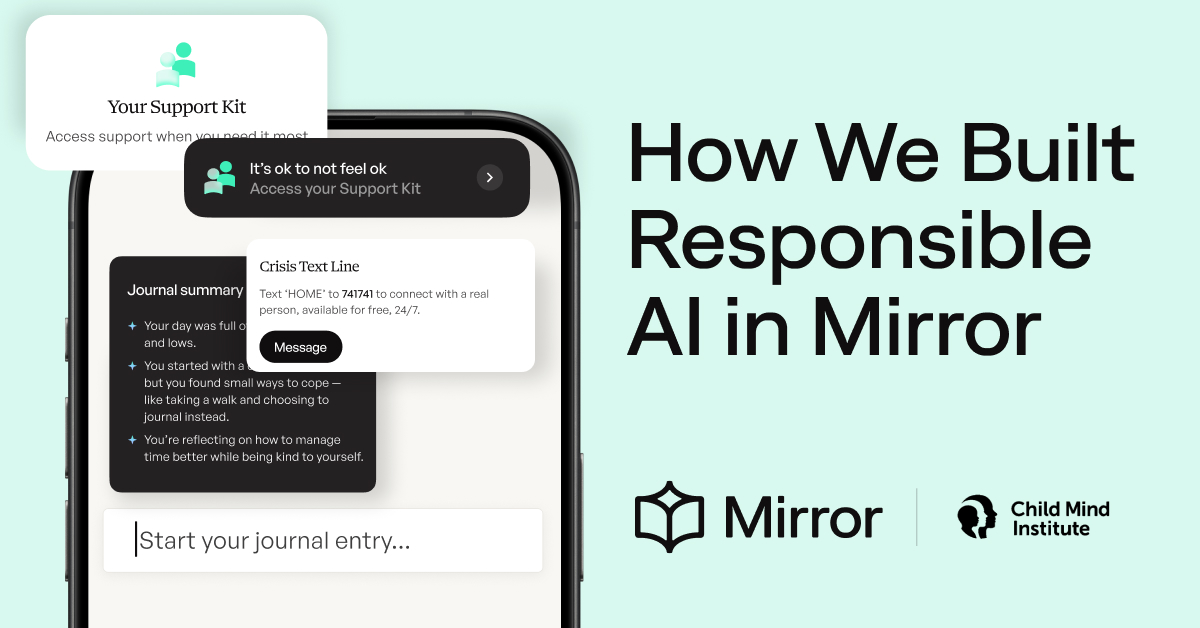
# How the Child Mind Institute Built Ethical AI Into a Teen Journaling App
The Child Mind Institute created Mirror, a digital journaling tool that puts ethics at its center rather than treating it as an afterthought. The developers faced a fundamental question: when teenagers share vulnerable thoughts with an algorithm, how should the technology respond in ways that protect them and connect them to real help?
This approach reflects a growing concern among child mental health experts about AI tools marketed to young people. Rather than focusing solely on engagement metrics or data collection, the Mirror team designed the app to serve as a bridge to meaningful human connection, not a replacement for it.
The specifics of how Mirror achieves this matter for parents evaluating digital mental health tools. The app processes sensitive disclosures without collecting data for commercial purposes. When journaling entries suggest a teen needs support, the technology flags information for human review and encourages connection with counselors, therapists, or trusted adults rather than keeping the teen isolated in a conversation with a machine.
This design reflects research showing that adolescents benefit from mental health tools that enhance human relationships rather than substitute for them. Teens with depression, anxiety, or other mental health challenges need real people who understand context, nuance, and their full story. An algorithm cannot replace that. It can, however, help a teen articulate thoughts they might struggle to express verbally, and then facilitate a conversation with someone trained to help.
Parents considering journaling apps for their teenagers should ask similar questions Mirror's developers asked themselves: Does this tool collect unnecessary data? Does it encourage human connection or discourage it? Is the company transparent about how the app works and what happens to entries?
The Child Mind Institute's approach signals that responsible AI in youth mental health means building guardrails into the technology itself, not bolting them on later. For families seeking digital tools that complement rather than replace professional care, Mirror offers a model worth understanding