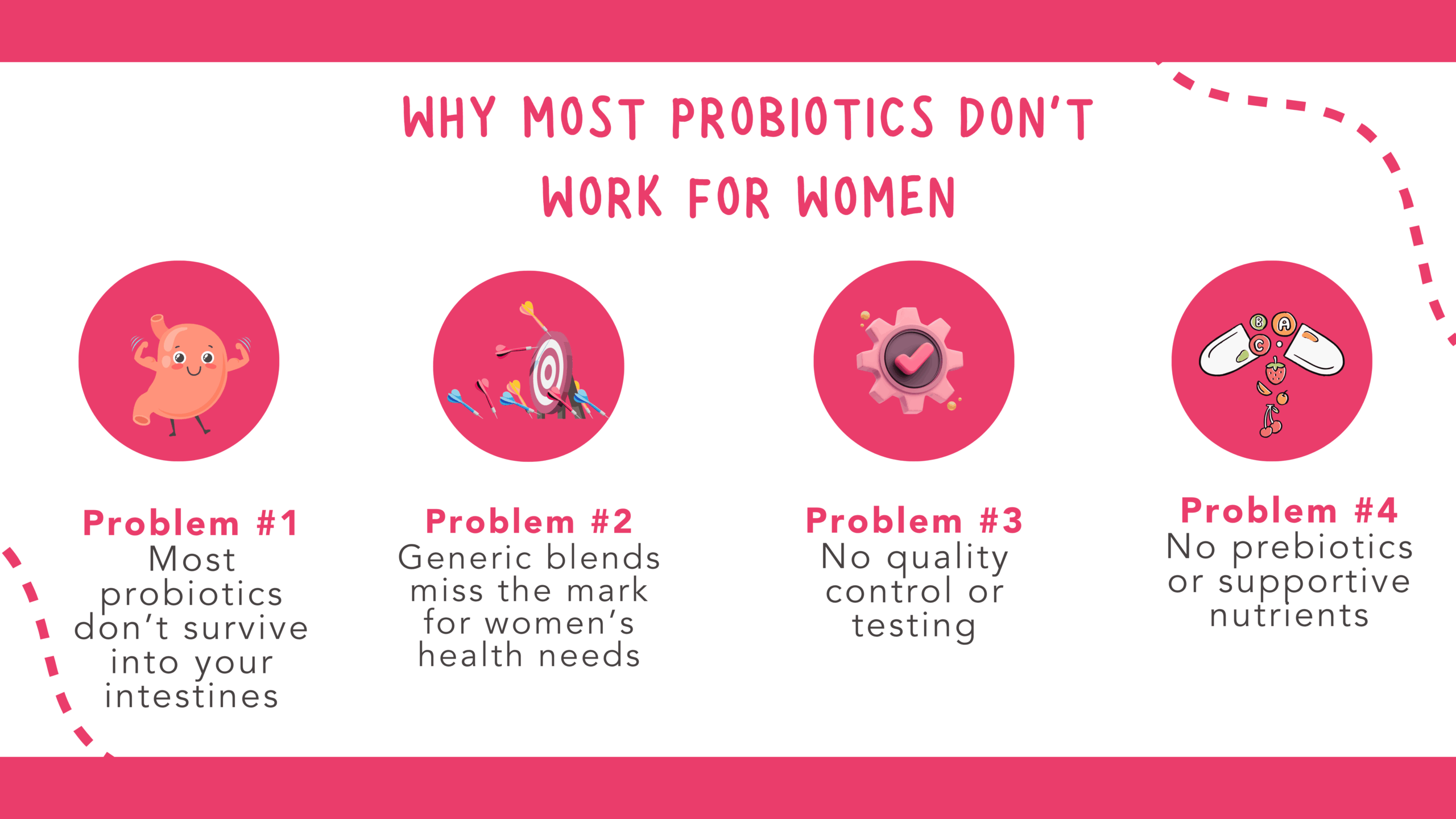
Most probiotics marketed to women don't deliver results because manufacturers use generic bacterial blends, low-quality strains, or formulations that don't survive stomach acid long enough to reach the gut. This explains why women try product after product without noticing improvements in digestion, skin clarity, or mood.
The problem starts with strain selection. Different probiotic bacteria species do different things. A random mix of strains won't target the specific health concerns women face, from hormonal imbalances to urinary tract health. Additionally, many commercial probiotics contain weak or dead cultures by the time they reach your digestive system.
Quality matters enormously. Third-party testing through organizations like NSF International or USP ensures products actually contain what the label promises. Many over-the-counter probiotics fail these tests, with some containing fewer live cultures than advertised or unstable formulations that degrade on store shelves.
Women-specific formulations address real differences in female gut bacteria and health needs. Research shows that women's microbiomes differ from men's, particularly in how hormones influence bacterial populations. Probiotics designed with this biology in mind include strains like Lactobacillus rhamnosus and Lactobacillus reuteri, which research links to digestive health and immune function.
Delivery technology also separates effective probiotics from ineffective ones. Enteric coating protects bacteria from stomach acid, allowing them to survive long enough to colonize the colon where they do the most good. Products using spore-based probiotics or sophisticated encapsulation technology perform better than unprotected cultures.
Before buying probiotics, parents and women should check labels for colony-forming units (CFU count), specific bacterial strains with research backing them, expiration dates, and third-party certification. Look for brands that publish transparency reports about their testing. Storage matters too. Prob