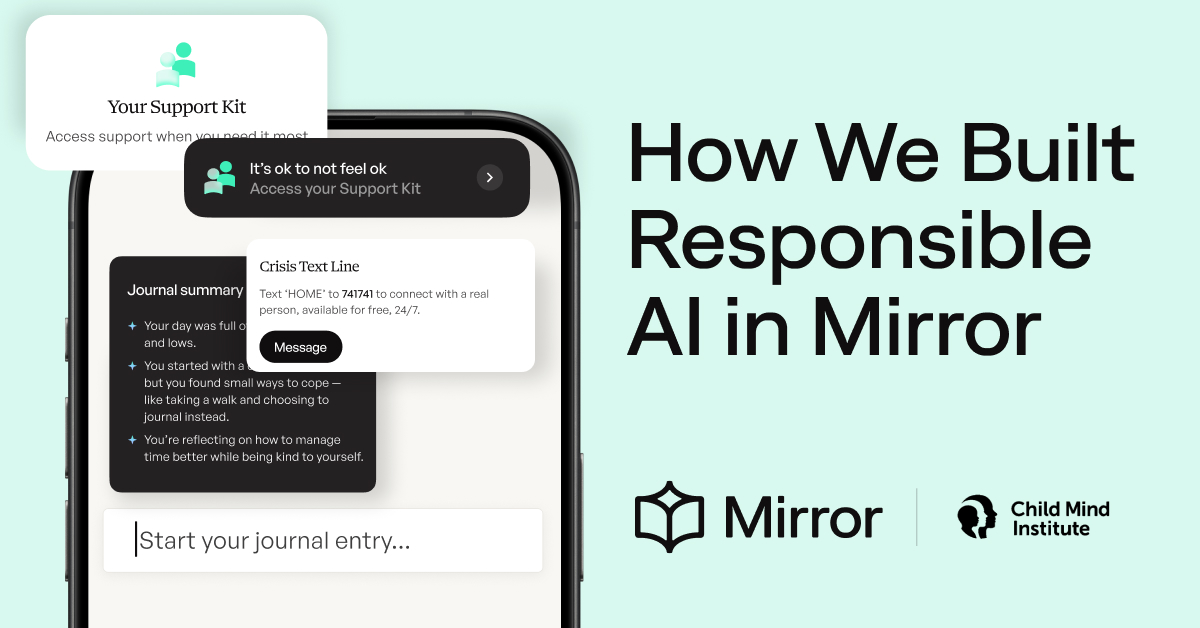
The Child Mind Institute developed Mirror, a digital journaling app that prioritizes ethical AI design over superficial wellness features. The team grappled with a fundamental question: when young people share vulnerable thoughts with an algorithm, how should the technology work.
Mirror treats AI as a tool for connection rather than replacement for human support. Instead of offering diagnosis or treatment, the app helps users articulate their feelings and encourages them to share those insights with trusted adults. This approach reflects growing concerns about mental health apps that overstate their capabilities or create false intimacy between users and algorithms.
The Child Mind Institute built several safeguards into Mirror's design. The team trained the AI to recognize crisis language and respond appropriately by directing users toward crisis resources. They also built transparency into the system so young people understand when they're interacting with AI versus human therapists or counselors.
The developers didn't rely on assumptions about what teenagers needed. They involved young people throughout the design process, testing early versions and incorporating feedback about what actually felt helpful versus intrusive or fake. This user-centered approach revealed that kids valued honesty about the app's limitations more than promises of instant relief.
Parents should know that Mirror works best as a complement to traditional mental health care, not a replacement. The app can help kids develop journaling habits and articulate their emotions before therapy sessions. It can also identify patterns that might be worth discussing with a therapist. But it cannot diagnose or treat mental health conditions.
The Child Mind Institute's emphasis on responsible AI matters because the mental health app market has exploded, and not all companies prioritize user safety equally. Some apps make unsubstantiated claims or collect user data without clear consent. Mirror's framework, which prioritizes vulnerability over viral growth, offers a model for how tech companies can build tools that respect young people's privacy and psychological needs.
If your child struggles with emotional expression, Mirror could provide a low-