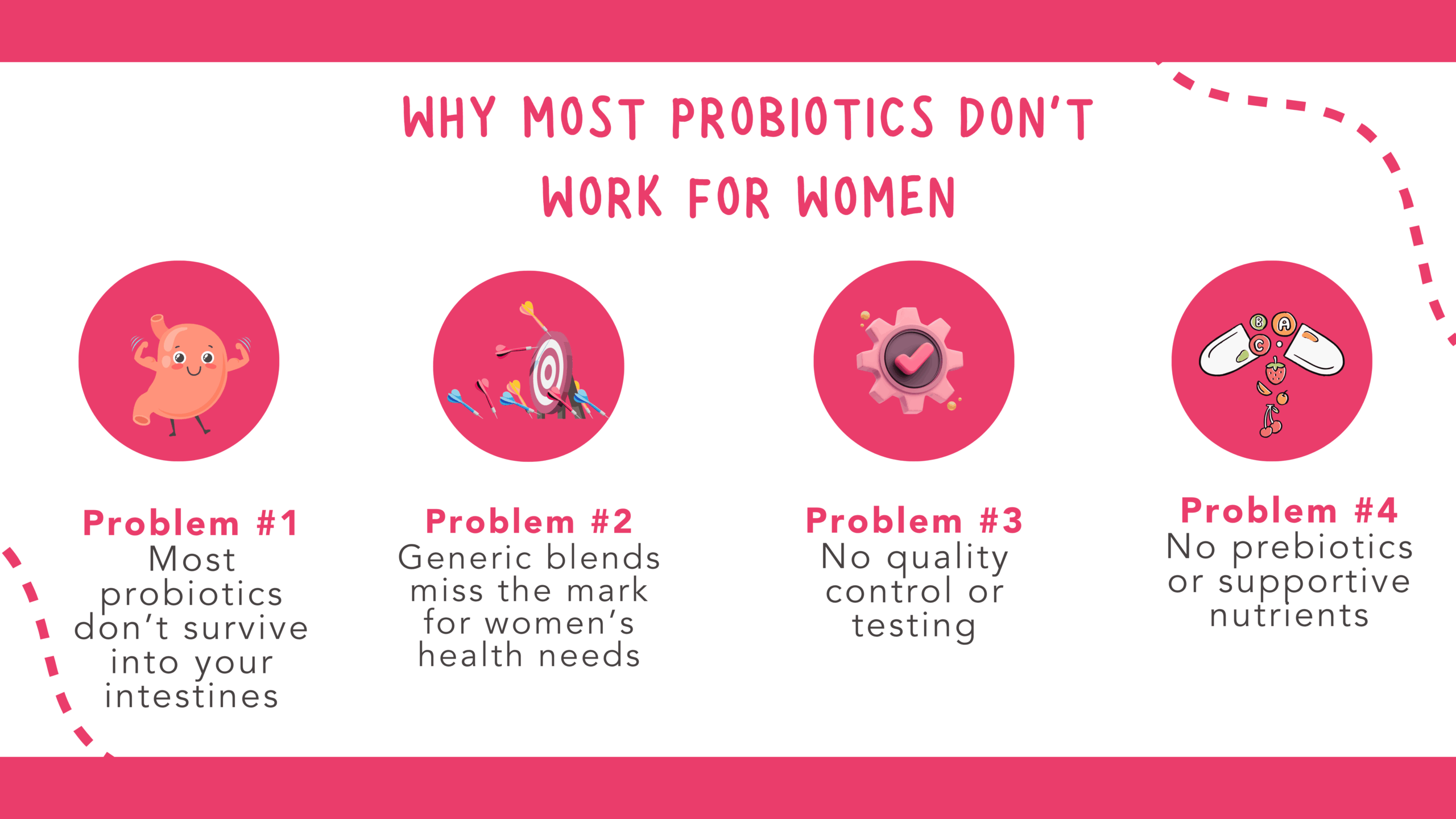
Most probiotics sold to women don't deliver results because they lack the right strain selection, potency, or stability to survive digestion. Generic formulations dominate store shelves, but women's microbiomes have distinct needs that these one-size-fits-all products simply don't address.
Research shows that probiotic effectiveness depends on three factors. First, the specific bacterial strains matter enormously. Lactobacillus and Bifidobacterium species work differently in women's bodies than in men's, particularly in the vaginal and urinary tracts where pH levels and hormone fluctuations create unique environments. Second, viable cell count at the time of consumption determines whether the bacteria can actually colonize the gut. Many commercial probiotics lose potency during manufacturing, storage, and transport. Third, the delivery method must protect bacteria from stomach acid long enough to reach the small intestine where they're absorbed.
Women shopping for probiotics should look for products with clinically studied strains rather than proprietary blends. Strains like Lactobacillus crispatus and Lactobacillus gasseri show evidence in peer-reviewed studies for women's health. The label should list CFU count (colony-forming units) in billions, not millions, and include an expiration date since probiotics degrade over time.
Enteric coating matters too. This special capsule layer protects bacteria from stomach acid, increasing the chance they reach your intestines alive. Without it, most probiotics die before doing anything.
Food-based sources like yogurt, kefir, sauerkraut, and kimchi contain live cultures, though amounts vary by brand. These work well for maintenance but may not provide therapeutic doses for specific concerns.
Before starting any probiotic, talk with your doctor or a registered dietitian, particularly if you're pregnant, nursing, or immuno