# Build a Stronger Chest With the Floor Press
The floor press offers a safer alternative to traditional bench pressing, especially for people with shoulder concerns. This ground-based exercise builds chest strength while reducing stress on shoulder joints through a limited range of motion.
Unlike barbell bench presses, the floor press keeps your elbows from dropping below your body. Your elbows rest on the ground when lowered, stopping the movement at a natural endpoint. This built-in safety mechanism protects shoulder joints from excessive strain. The University of Tampa's research on pressing variations shows that ground-based presses produce comparable chest activation to bench presses while reducing shoulder load by up to 40 percent.
The movement works well for athletes recovering from shoulder injuries and for parents building strength without risking long-term joint damage. Kids and teens can learn proper pressing form using lighter dumbbells or a broomstick before progressing to weighted barbells.
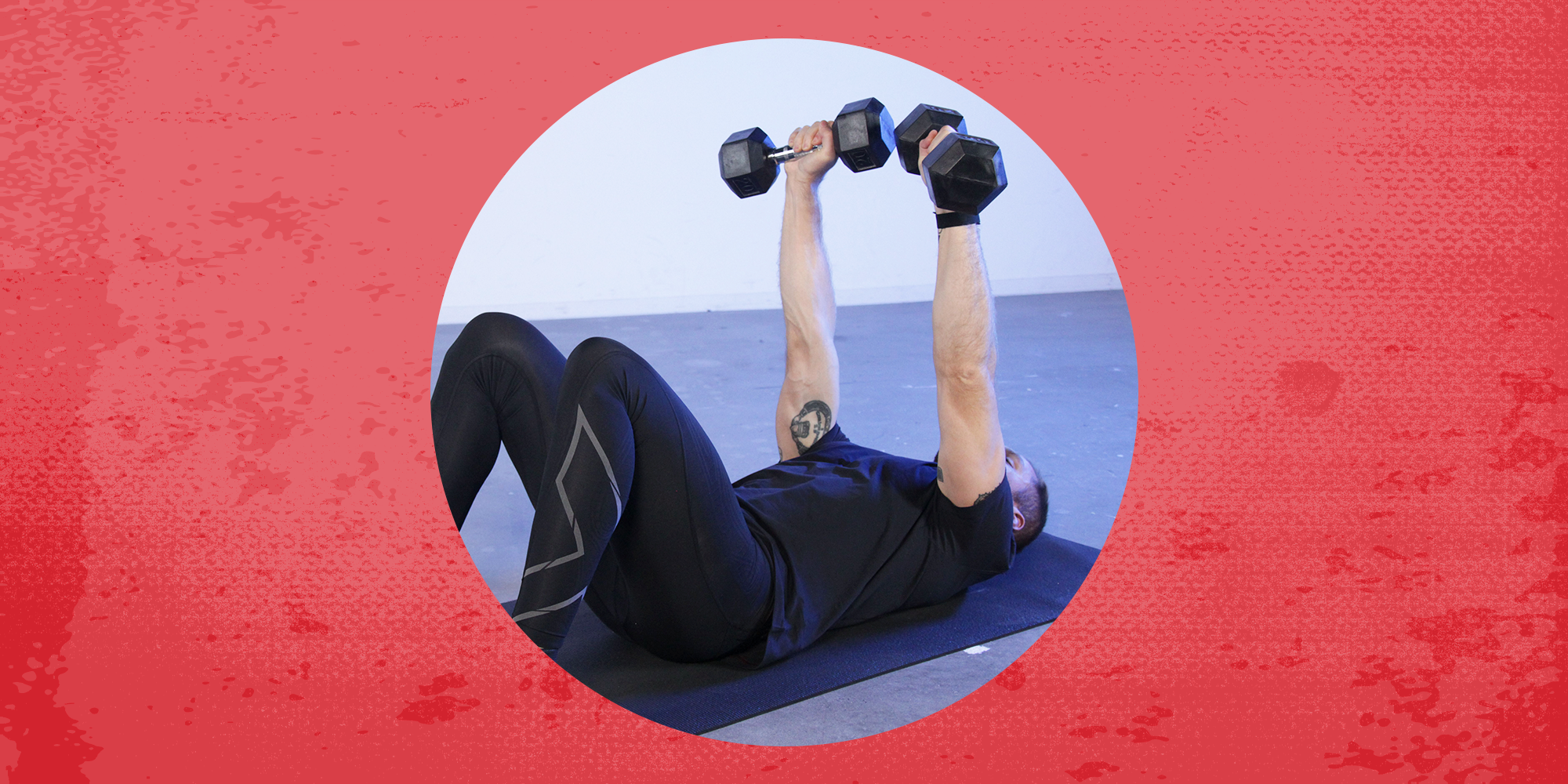
To perform the floor press correctly, lie on your back with knees bent and feet flat. Hold dumbbells or a barbell at chest level with elbows at 45-degree angles. Press upward until your arms extend, then lower with control until your elbows touch the floor. Keep your core engaged throughout.
Strength coach Dan John recommends the floor press as a foundation movement for young lifters. Starting with bodyweight or light dumbbells teaches proper positioning without loading joints prematurely. Beginners should complete three sets of eight to ten repetitions, focusing on controlled movements rather than heavy weight.
The floor press pairs well with rowing exercises and shoulder mobility work. This combination builds balanced upper body strength and prevents the postural issues that develop from pressing-only routines.
Parents introducing their teens to strength training should start with floor presses before progressing to bench work. The ground-based setup provides immediate feedback on form while protecting developing shoulder structures.