# Finding Answers When Your Child Is Struggling: Introducing Ask Kai
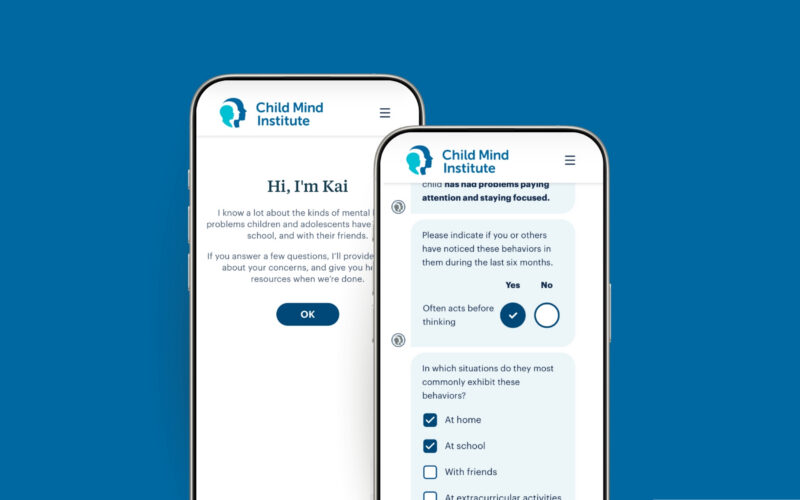
The Child Mind Institute launched Ask Kai, a conversational symptom checker designed to help parents navigate their child's behavioral and emotional concerns. The tool works like a digital assistant, letting parents describe what they're observing in their child and offering guidance on next steps.
Ask Kai addresses a real gap in parenting support. Many parents struggle to know whether their child's behavior falls within normal development or signals something that needs professional attention. A child who refuses to go to school could be experiencing separation anxiety, school avoidance, or genuine distress. A teen withdrawing from friends might be navigating typical adolescence or showing signs of depression. Without expertise, parents often feel stuck between dismissing real problems and catastrophizing normal phases.
The tool works by asking clarifying questions about what parents observe. Rather than offering diagnoses, Ask Kai helps parents understand patterns and recommends appropriate resources, from parenting strategies to professional evaluation. This approach aligns with how child development experts actually think through behavioral concerns.
The Child Mind Institute, a nonprofit research and treatment organization, built Ask Kai with evidence-based information. The conversational format makes it accessible for busy parents who might not have time to read lengthy articles about child development or mental health.
Parents should view Ask Kai as a starting point, not a replacement for professional evaluation. If a child shows signs of significant distress, school refusal, self-harm, or other concerning behaviors, talking with a pediatrician or child mental health professional remains essential. Tools like this work best as bridges to professional care, helping parents gather their observations and feel more confident about seeking help.
For families struggling to access mental health services, Ask Kai offers immediate support. It normalizes conversations about children's emotional wellbeing and reminds parents that noticing changes in behavior is the first step toward helping. The tool is