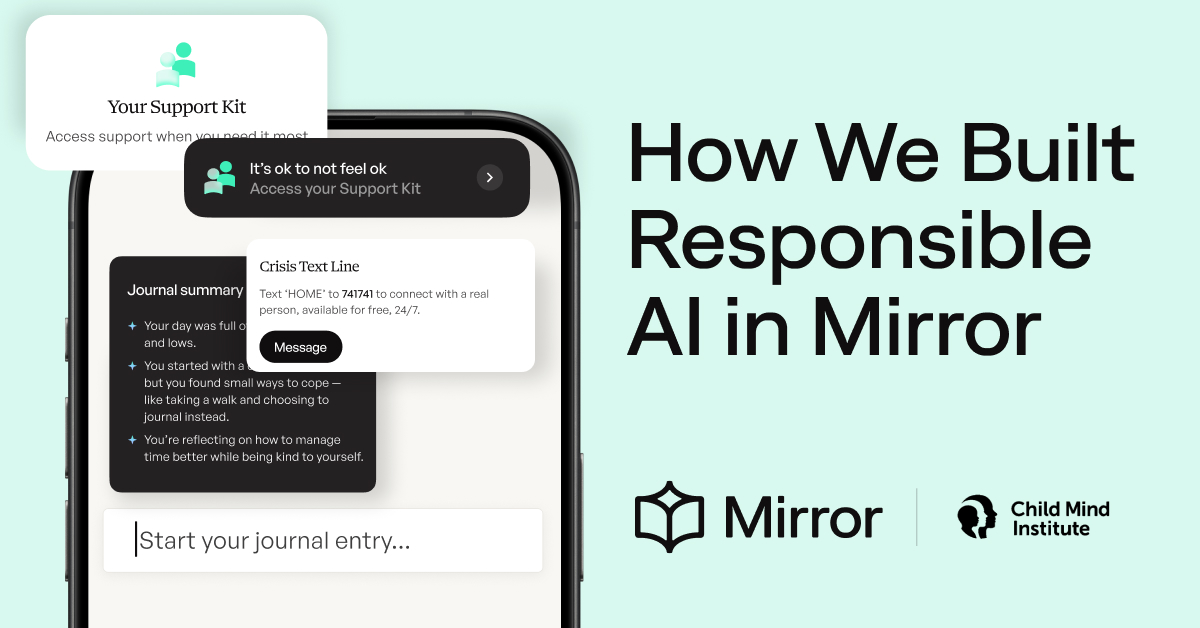
# How We Built Responsible AI in Mirror Journal
The Child Mind Institute launched Mirror, a digital journaling app designed with ethics at its center. Rather than positioning AI as a substitute for human support, the team built the tool to strengthen connections between young people and the caring adults in their lives.
Mirror's approach reflects a broader shift in mental health technology. Many apps treat algorithms as replacements for therapy or counseling. Mirror does something different. The app helps young people articulate their thoughts and feelings through journaling, then facilitates sharing those insights with parents, therapists, or other trusted people. The AI serves as a bridge, not a barrier.
This design philosophy addresses a real concern parents have about mental health apps. Kids often resist talking to adults about their struggles. Journaling feels safer. But privacy without insight doesn't help. Mirror lets teens maintain their private journaling space while giving them control over what they share and with whom.
The Child Mind Institute, a nonprofit research organization that specializes in child and adolescent mental health, embedded responsible AI principles throughout development. This means transparency about how the algorithm works, clear data protections, and age-appropriate features. The team asked fundamental questions before coding a single line: What are we actually trying to accomplish? Who benefits? What could go wrong?
For parents, Mirror offers something practical. Instead of guessing what's troubling your teen, you get their words, shared on their terms. This can transform conversations from accusatory ("What's wrong with you?") to collaborative ("Tell me more about what you wrote").
The tool works best alongside professional support, not instead of it. If a teen's journal reveals warning signs, parents receive guidance on next steps. The app doesn't pretend to diagnose or treat. It documents and connects.
Mirror joins a growing category of mental health tools built specifically for young people. But its emphasis on human connection over AI dependency sets it apart