# Why Most Probiotics Don't Work for Women (And What Actually Does)
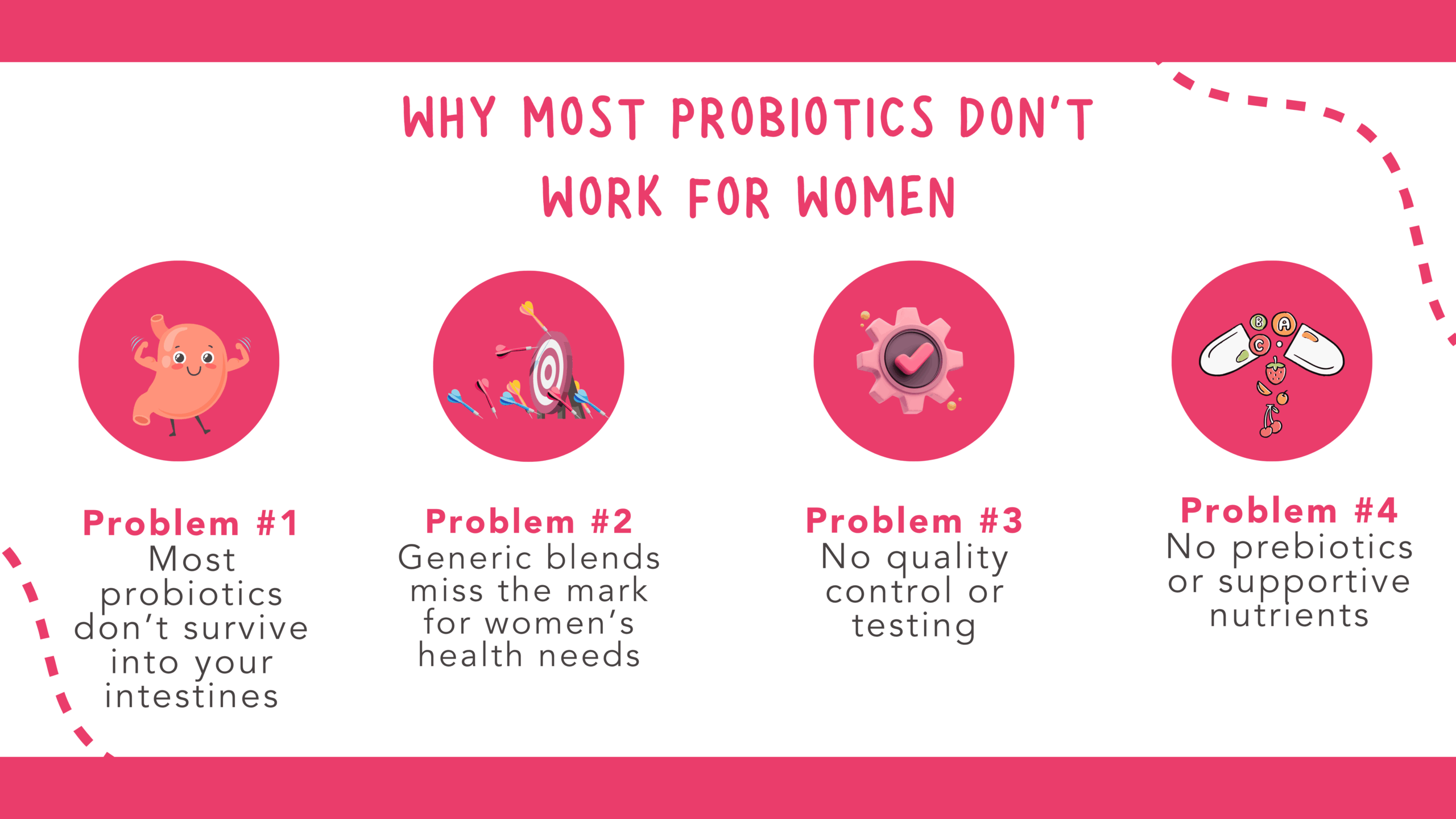
Women spend billions on probiotics each year, yet most products fail to deliver results. The problem isn't probiotics themselves. It's that the vast majority of supplements on store shelves use generic formulations never tested on female bodies, rely on weak bacterial strains, or fall apart before reaching the gut where they need to work.
Your digestive system differs from men's in meaningful ways. Women have longer colons, different hormone levels, and unique vaginal microbiomes that generic probiotic blends don't address. A probiotic containing *Lactobacillus rhamnosus* might help men with bloating but do nothing for a woman dealing with hormonal digestive shifts or yeast overgrowth.
Most commercial probiotics also contain insufficient CFU counts (colony-forming units) to survive stomach acid. Many products promise 10 to 50 billion CFUs but only deliver 1 to 2 billion living organisms to your intestines. Others use cheap strains with poor survival rates or include filler ingredients that undermine efficacy.
What actually works? Look for probiotics formulated specifically for women, with clinical research backing the exact strains used. *Lactobacillus crispatus* and *Lactobacillus gasseri* show evidence for vaginal and digestive health in women. Products should contain at least 25 billion CFUs from established, studied strains. Enteric coating matters too. This protective shell prevents stomach acid from destroying beneficial bacteria before they reach your colon.
Quality matters more than brand recognition. Third-party tested products from companies like Seed, Ritual, and Biotics Research publish their strain research and viability data. Cheaper options often contain dead bacteria or unstudied organisms.
Consider also that probiotics