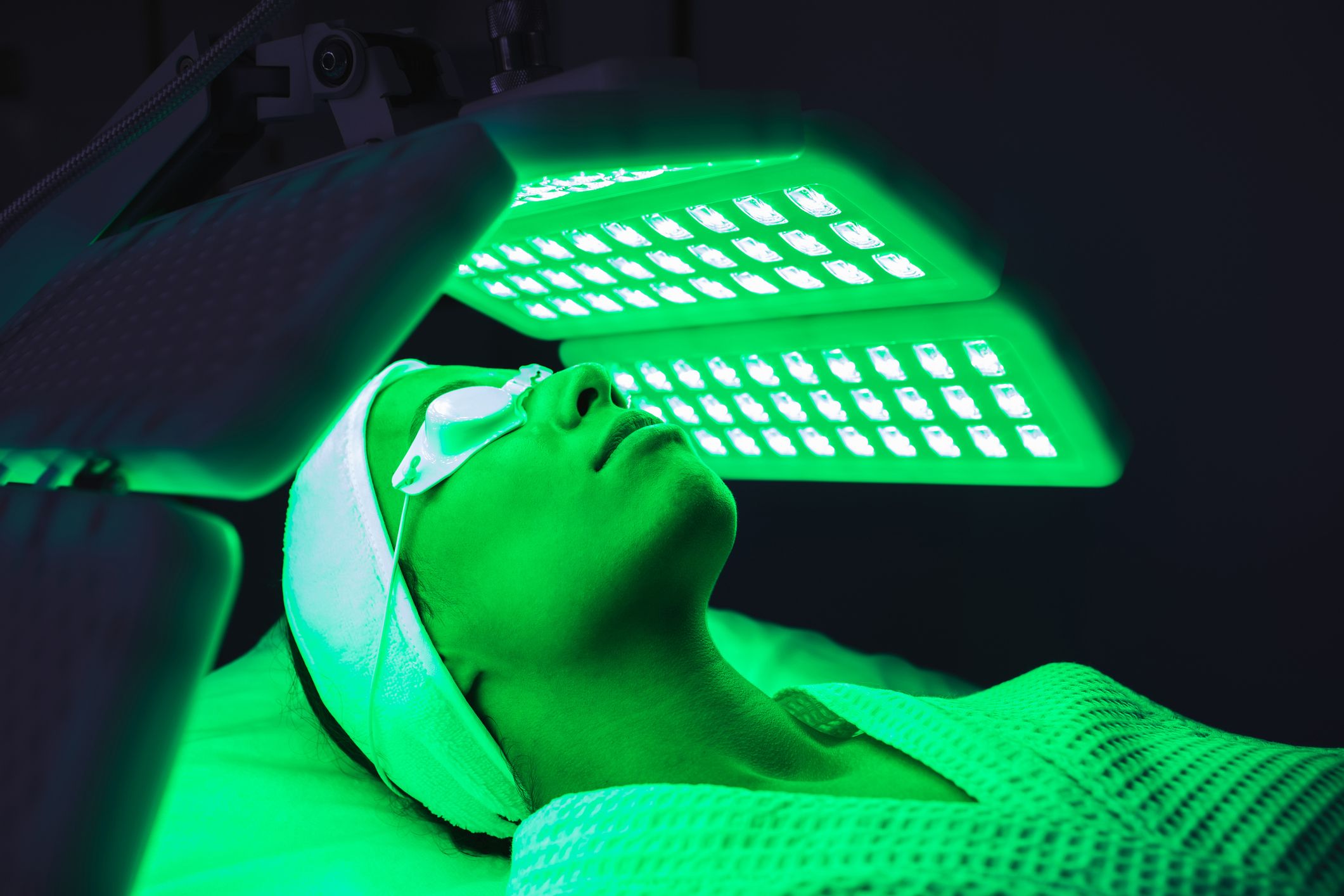
# What Is Green Light Therapy for Skin? Experts Break Down This Latest Treatment
Green light therapy is emerging as a dermatological treatment for hyperpigmentation and dark spots. Unlike red light therapy, which penetrates deeper into skin layers, green light works on the epidermis and operates at a wavelength around 500-550 nanometers.
Dermatologists say green light targets melanin directly. When melanin absorbs green wavelengths, it breaks apart pigmented cells responsible for dark spots and uneven tone. This mechanism makes it particularly useful for treating melasma, age spots, and post-inflammatory hyperpigmentation.
The research backing green light remains emerging. Studies show promise for reducing visible pigmentation within 4 to 12 weeks of consistent treatment, though results vary based on skin type and spot severity. Darker skin tones respond well because melanin efficiently absorbs these wavelengths, but fair skin also benefits.
Green light therapy works through in-office treatments or at-home devices. Professional sessions typically last 15 to 30 minutes and cost $100 to $300 per treatment. At-home masks and panels range from $50 to $500. Both approaches require multiple sessions for noticeable results.
Safety profiles remain favorable. Green light does not cause the irritation or sensitivity sometimes linked to more aggressive treatments like chemical peels or laser therapy. Users report minimal downtime and no recovery period.
Combination therapy shows stronger results. Many dermatologists pair green light with retinoids, vitamin C serums, or sun protection to enhance pigmentation reduction. This multimodal approach addresses dark spots from several angles simultaneously.
Before starting green light therapy, consult a dermatologist. They assess whether your dark spots stem from sun damage, hormonal changes, or post-inflammatory response. Treatment plans differ accordingly. Those with active mel