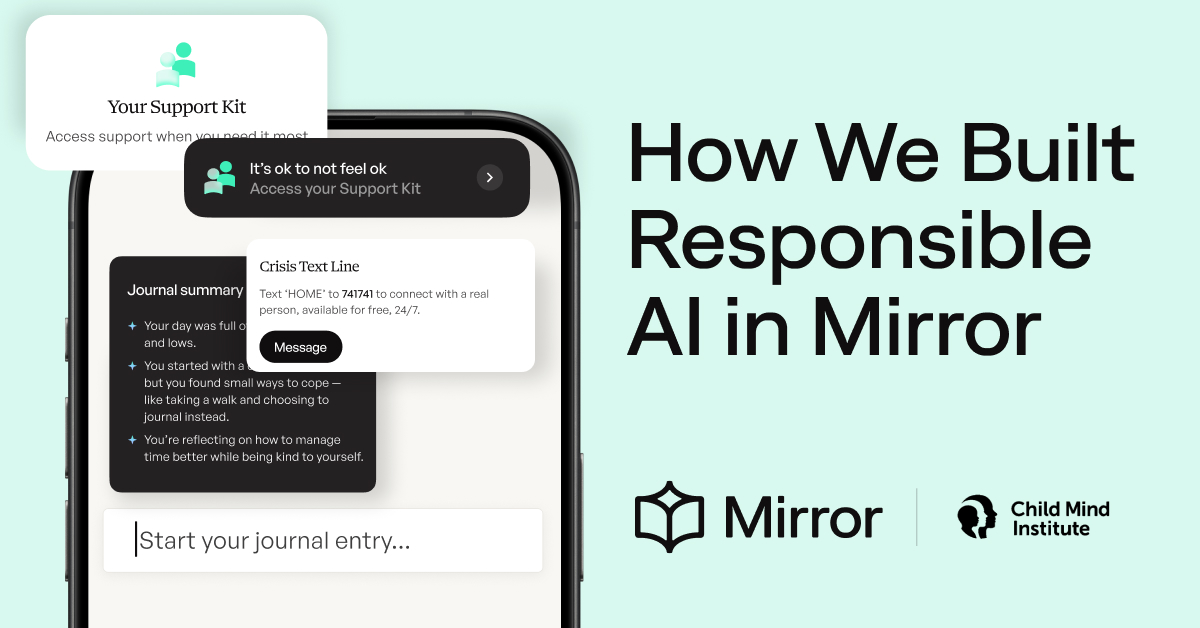
The Child Mind Institute released Mirror, a digital journaling app designed around a fundamental principle: artificial intelligence should strengthen human connection, not replace it. The developers faced an ethical challenge from the start. When children and teens share vulnerable thoughts with an algorithm, what responsibility does that technology carry?
Mirror operates differently than typical mental health apps. Rather than positioning AI as a substitute for professional support, the tool functions as a bridge to human care. The Child Mind Institute built the app with safeguards that recognize when young users need real clinical attention. The AI identifies concerning patterns in entries, not to diagnose, but to flag moments when a conversation with a therapist or counselor becomes necessary.
This approach reflects growing concern among child mental health experts about AI's role in sensitive spaces. Apps that offer only algorithmic responses can delay care for young people in crisis. Mirror's developers rejected that model entirely.
The app allows teenagers to express thoughts they might hesitate to share aloud. The writing itself becomes therapeutic, a practice supported by decades of journaling research. The AI then helps organize and reflect on entries, showing patterns over time. But the critical difference lies in what happens next. Rather than offering reassurance the algorithm thinks will help, Mirror escalates to human professionals when entries suggest serious depression, suicidality, or self-harm.
This design choice required difficult decisions. The developers had to define exactly when AI steps back. They worked with child psychiatrists and ethicists to set these thresholds responsibly. The result prioritizes safety over engagement metrics. An app that pushes users toward human care won't maximize daily active users or subscription numbers, but it serves the actual mission: supporting young people's mental health.
For parents evaluating mental health apps, Mirror demonstrates what responsible AI design looks like. It acknowledges both the benefits of private reflection and the limits of technology. Children and teens dealing with depression, anxiety, or other mental health challenges