# Why Most Probiotics Don't Work for Women (And What Actually Does)
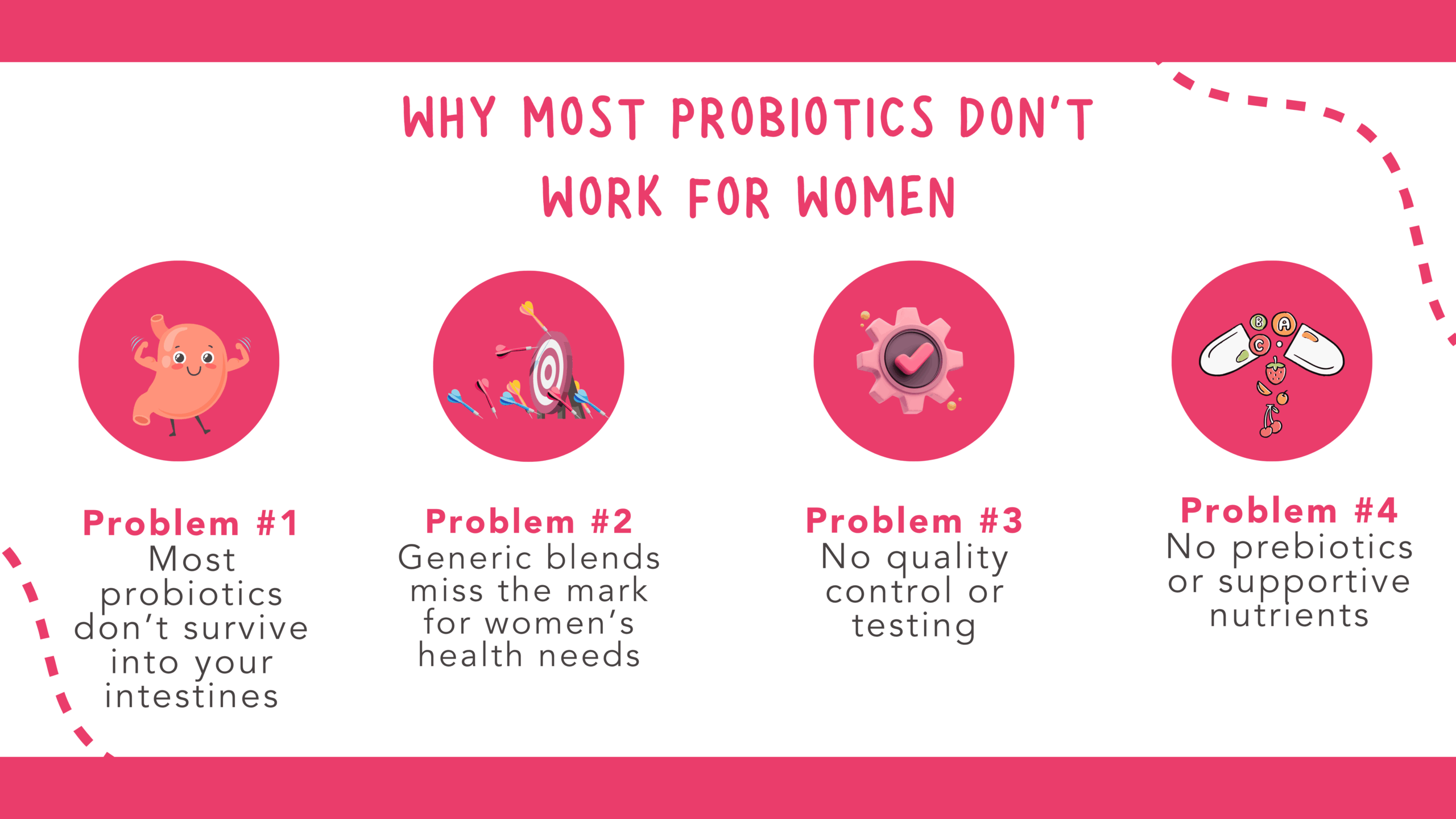
Most women waste money on probiotics that simply don't deliver results. The problem runs deeper than marketing hype. Generic probiotic blends flooding the market lack strains specifically studied for women's health, use low-quality bacteria, or contain formulations too fragile to survive stomach acid and reach the gut intact.
Women's bodies have distinct microbiome needs that differ from men's. Hormonal fluctuations throughout the menstrual cycle, pregnancy, and menopause shift vaginal pH and bacterial balance. Typical probiotics don't account for these changes. They also often skip the research on which strains actually help with issues women face: bacterial vaginosis, yeast infections, UTIs, digestive complaints, and skin conditions linked to gut health.
The science matters here. Lactobacillus crispatus and Lactobacillus gasseri show strong evidence for supporting vaginal health in women. For digestion and mood, Bifidobacterium longum and Lactobacillus rhamnosus have solid research backing. Yet most commercial products contain strains chosen for cost, not effectiveness.
Survival matters too. A probiotic must withstand stomach acid, bile, and heat to colonize the colon. Budget products often fail this test, delivering dead bacteria that do nothing. Look for formulations with protective coatings, delayed-release capsules, or enteric protection.
Quality testing separates winners from duds. Third-party verification through NSF International or USP (United States Pharmacopeia) confirms that products contain the promised bacterial counts and strains. Many store-bought options fail these checks.
For women seeking real results, choose products specifically formulated for women's microbiome health. Check labels for: clinically studied strains backed