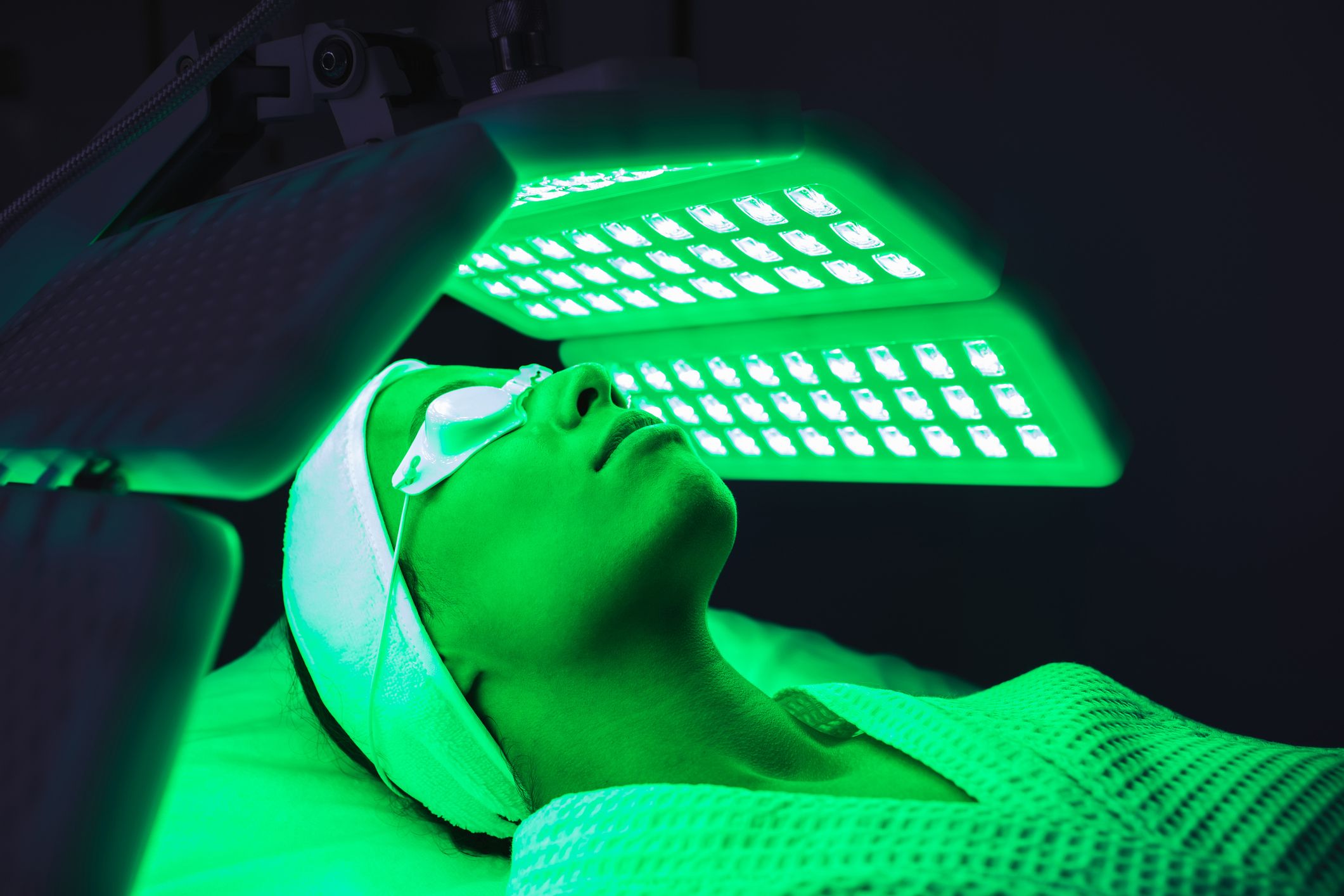
Green light therapy uses specific wavelengths in the 500-550 nanometer range to treat skin concerns, particularly dark spots and hyperpigmentation. Dermatologists are increasingly recommending this treatment as a gentler alternative to traditional laser therapies.
Unlike blue light, which targets acne-causing bacteria, or red light, which stimulates collagen production, green light works by reducing melanin production and calming inflammation. This makes it especially useful for people with sensitive skin or those prone to post-inflammatory hyperpigmentation.
The mechanism is straightforward. Green wavelengths penetrate the epidermis without reaching deeper skin layers, minimizing irritation and downtime. Studies show the treatment works by activating specific proteins in skin cells that decrease melanin synthesis. This differs from harsher treatments like chemical peels or intensive pulsed light therapy, which can trigger rebound pigmentation in darker skin tones.
Board-certified dermatologists note that green light therapy pairs well with other treatments. Many practices combine it with retinoids or vitamin C serums to amplify results. The treatment typically requires multiple sessions spaced 2-4 weeks apart, with visible improvements in dark spots appearing after 6-8 weeks of consistent use.
At-home devices are now available, though professional-grade treatments deliver stronger results. Brands like Theralight and Neutrogena offer consumer versions, while dermatology offices use medical-grade systems that produce higher irradiance levels.
Green light therapy works best for melasma, sun spots, and post-acne marks. Results improve when combined with strict sun protection, since UV exposure can reverse progress. The treatment suits all skin tones, including darker complexions where traditional laser treatments pose higher risk.
Side effects remain minimal. Mild redness immediately after treatment typically resolves within hours. Some users report temporary sensitivity, managed easily