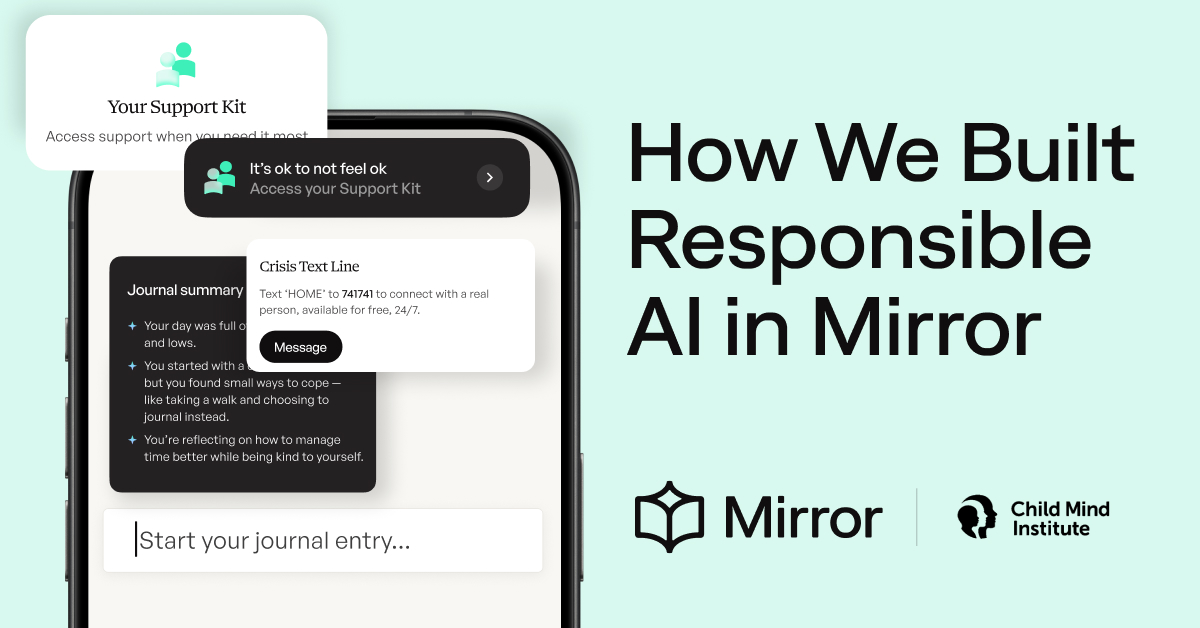
The Child Mind Institute created Mirror, a digital journaling app that uses artificial intelligence to help young people explore their emotions while protecting their privacy and mental health. Rather than replacing human connection, the developers designed Mirror to strengthen it.
The team faced a fundamental challenge: how to harness AI responsibly when users share deeply personal thoughts with an algorithm. Their solution prioritized transparency and safety. Mirror guides young people through reflective prompts and uses AI to help them recognize patterns in their thinking without making clinical judgments or replacing therapy.
The developers built several safeguards into the platform. The app flags concerning content and connects users to crisis resources when needed, rather than attempting to diagnose or treat mental health conditions. This approach respects the reality that algorithms cannot replace trained mental health professionals.
Mirror's architecture treats the AI as a thinking partner, not a counselor. When a teen writes about feeling overwhelmed, the algorithm helps them explore what's happening. It might ask follow-up questions or suggest they notice patterns over time. The goal remains consistent: use technology to deepen self-awareness and encourage conversations with trusted adults, therapists, or counselors.
The Child Mind Institute team also tackled data security. User journals stay private, and the institute designed the system to minimize data collection. They built the app with child welfare at the center of every decision, not as an afterthought.
This responsible AI approach reflects growing concern about mental health apps targeting young people. Many apps make grand claims about treating anxiety or depression without evidence. Mirror takes the opposite path. It positions itself as a supplement to professional care and human relationships, not a replacement.
For parents, Mirror offers a tool to help teens develop emotional awareness and journaling habits. The app works best when parents stay involved, discussing what their teens learn about themselves. This keeps the technology in its proper place: a bridge toward deeper family conversations and, when needed, professional support.
CATEGORY