# Why Most Probiotics Don't Work for Women (And What Actually Does)
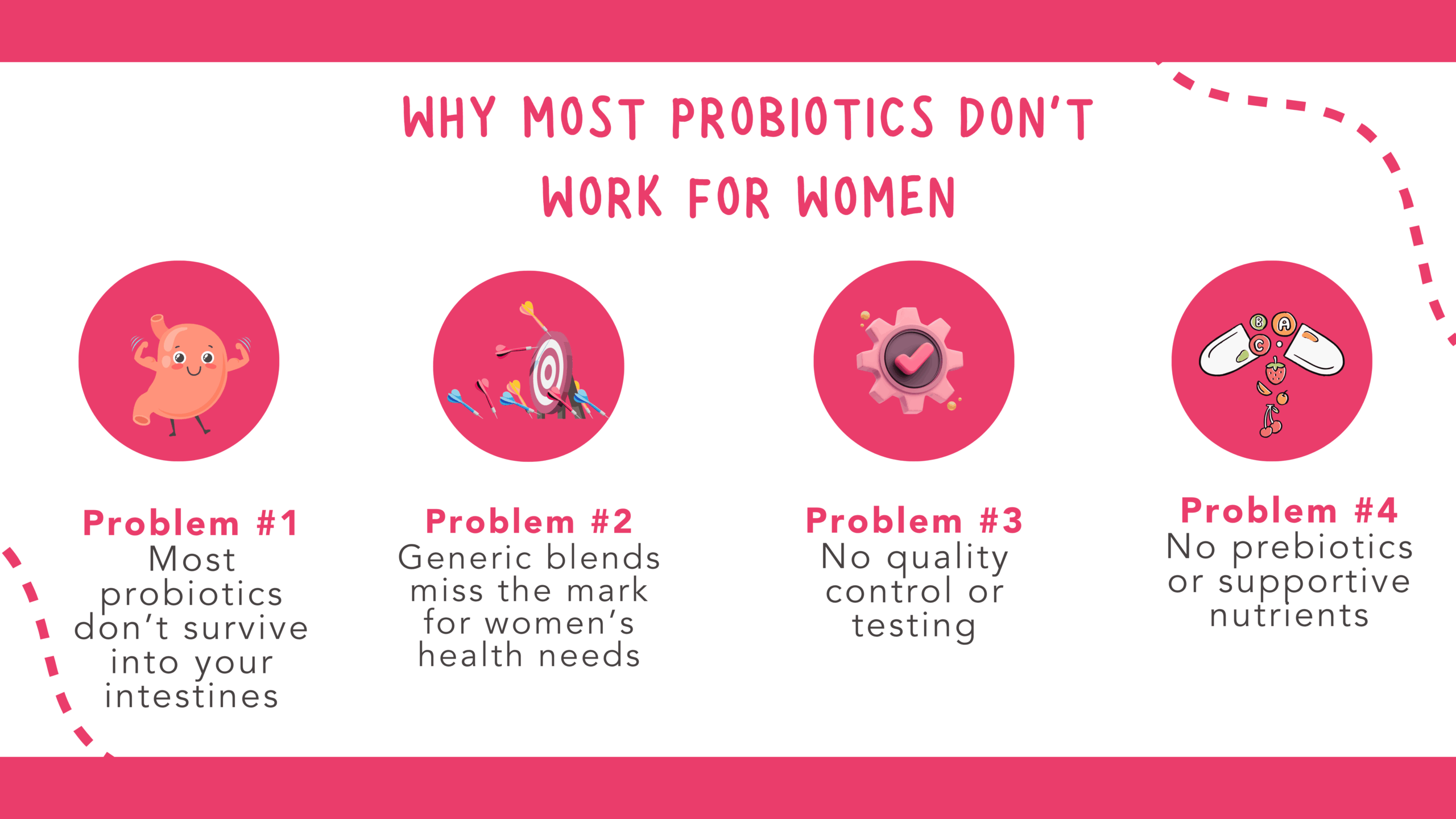
Most women taking probiotics see disappointing results because manufacturers ignore their biology. Commercial probiotic blends lack strains proven effective for women's health, contain low-quality bacteria, or fail to survive stomach acid long enough to reach the intestines where they work.
Women's microbiomes differ from men's due to hormonal fluctuations, menstrual cycles, and pH variations. Yet standard probiotic formulas treat all bodies the same. The strains that help men may not address women's specific concerns like recurring yeast infections, urinary tract infections, digestive issues tied to hormonal changes, or skin problems linked to gut health.
Research shows that survival rates matter enormously. Bacteria must stay alive through stomach acid and bile to colonize the colon effectively. Many over-the-counter probiotics lack proper enteric coating or refrigeration, killing colony-forming units (CFUs) before consumption. Women need formulations with heat-stable strains and protective delivery systems.
Look for probiotics specifically researched in women. Lactobacillus crispatus and Lactobacillus gasseri show evidence for vaginal and urinary health. Bifidobacterium longum and Lactobacillus plantarum demonstrate digestive benefits in female-specific studies. Check labels for CFU counts (at least 10 billion for therapeutic effect), third-party testing through NSF or ConsumerLab, and refrigeration requirements if listed.
Timing matters too. Taking probiotics with food improves survival rates compared to empty-stomach dosing. Consistency beats occasional use. Benefits typically emerge after two to three weeks of daily intake.
Quality matters more than brand hype. Mama Natural recommends researching specific strains and manufacturers rather than trusting marketing claims about "