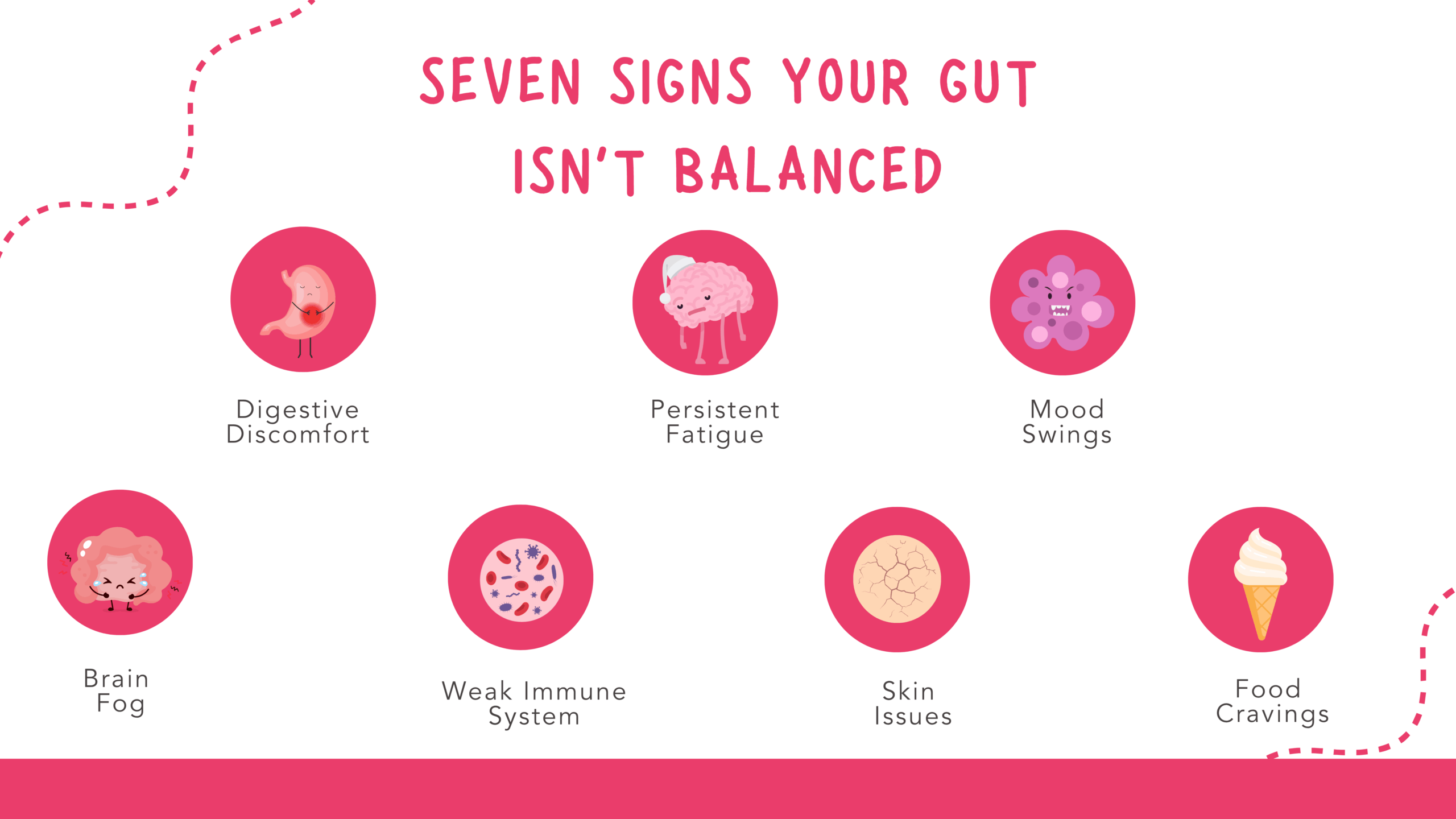
# 7 Signs Your Gut May Be Out of Balance
Your child's digestive health affects far more than just their stomach. An imbalanced gut microbiome can trigger mood changes, skin problems, bloating, and other symptoms parents often overlook.
The gut microbiome—trillions of bacteria living in your child's digestive tract—plays a central role in immune function, nutrient absorption, and even brain chemistry. When this balance tips, children experience tangible changes in behavior and physical health.
Common signs of gut imbalance include digestive complaints like bloating, constipation, or diarrhea. But parents should also watch for mood swings, anxiety, or irritability, since the gut-brain axis connects digestive health directly to emotional regulation. Skin issues like eczema or acne often correlate with gut problems too. Food sensitivities, fatigue, and frequent infections round out the picture.
What throws gut bacteria off balance? Antibiotics, highly processed diets low in fiber, added sugars, and insufficient sleep all disrupt microbial diversity. Even stress impacts the microbiome.
Rebalancing starts with food. Fermented foods like yogurt, kefir, sauerkraut, and kombucha introduce beneficial bacteria. Prebiotic foods like bananas, oats, garlic, and onions feed good bacteria. Whole grains, legumes, and plenty of vegetables support diversity.
Consider reducing processed foods and added sugars, which feed harmful bacteria. If your child has taken antibiotics recently, probiotic supplementation may help restore balance. Brands like Culturelle Kids and Renew Life make age-appropriate formulas.
Sleep matters too. Aim for consistent bedtimes and adequate hours for your child's age. Stress management through play, outdoor time, or yoga