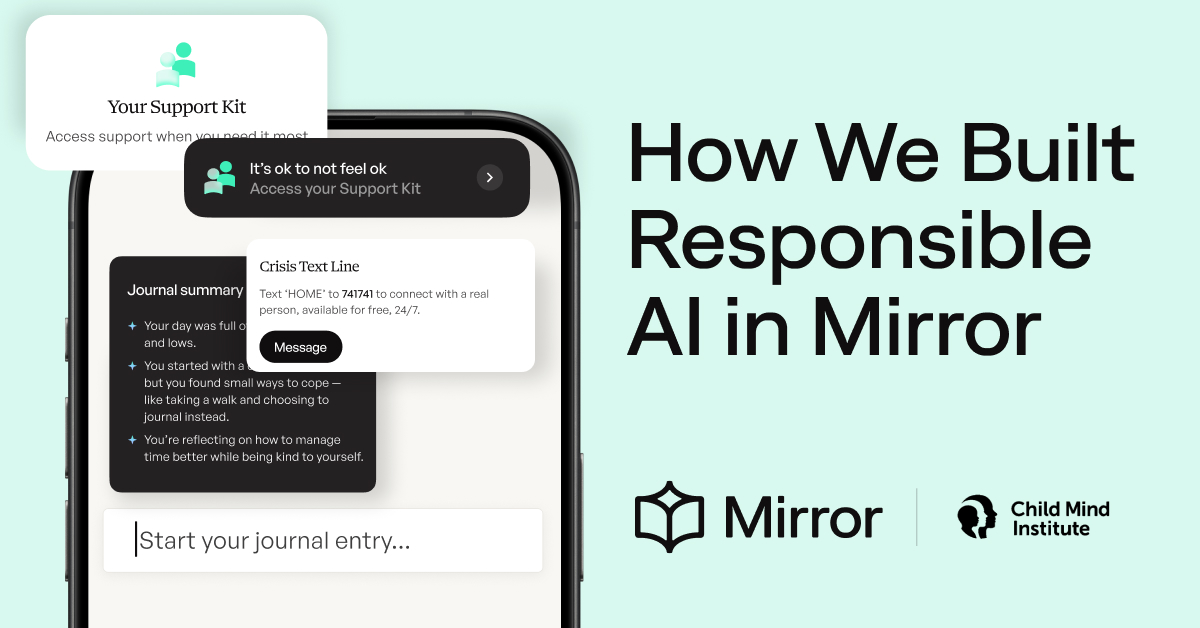
The Child Mind Institute built Mirror, a digital journaling app, with an intentional focus on ethics rather than just convenience. The team prioritized a central question during development: how can AI technology become a bridge to human connection rather than a replacement for it.
Mirror lets young people journal their thoughts and feelings with AI support. The developers at the institute embedded responsibility into the tool's design from the start. This means the app guides kids toward real conversations with trusted adults, therapists, or counselors instead of relying solely on algorithmic responses to emotional struggles.
The approach reflects growing concerns about mental health apps that promise too much or create dependency on technology for emotional processing. The Child Mind Institute, a respected nonprofit focused on children's mental health, applied their clinical expertise to prevent common pitfalls. The team built safeguards into the algorithm to recognize when a young person needs human help, not just digital feedback.
This matters because adolescents and children are increasingly turning to apps for emotional support. A responsible design ensures the technology serves as a tool for reflection and connection, not isolation. Mirror's framework suggests that AI in mental health spaces should enhance human relationships, not replace them.
Parents considering digital tools for their children's mental health should look for these markers: Does the app encourage talking to real people? Does it have clear safety protocols? Is it built by organizations with clinical credibility? The Child Mind Institute's approach with Mirror suggests yes on all fronts.
For families exploring digital mental health options, Mirror offers an example of what thoughtful AI design looks like when child welfare comes first. The app acknowledges that vulnerability shared with technology should ultimately lead somewhere more human, not deeper into a screen.