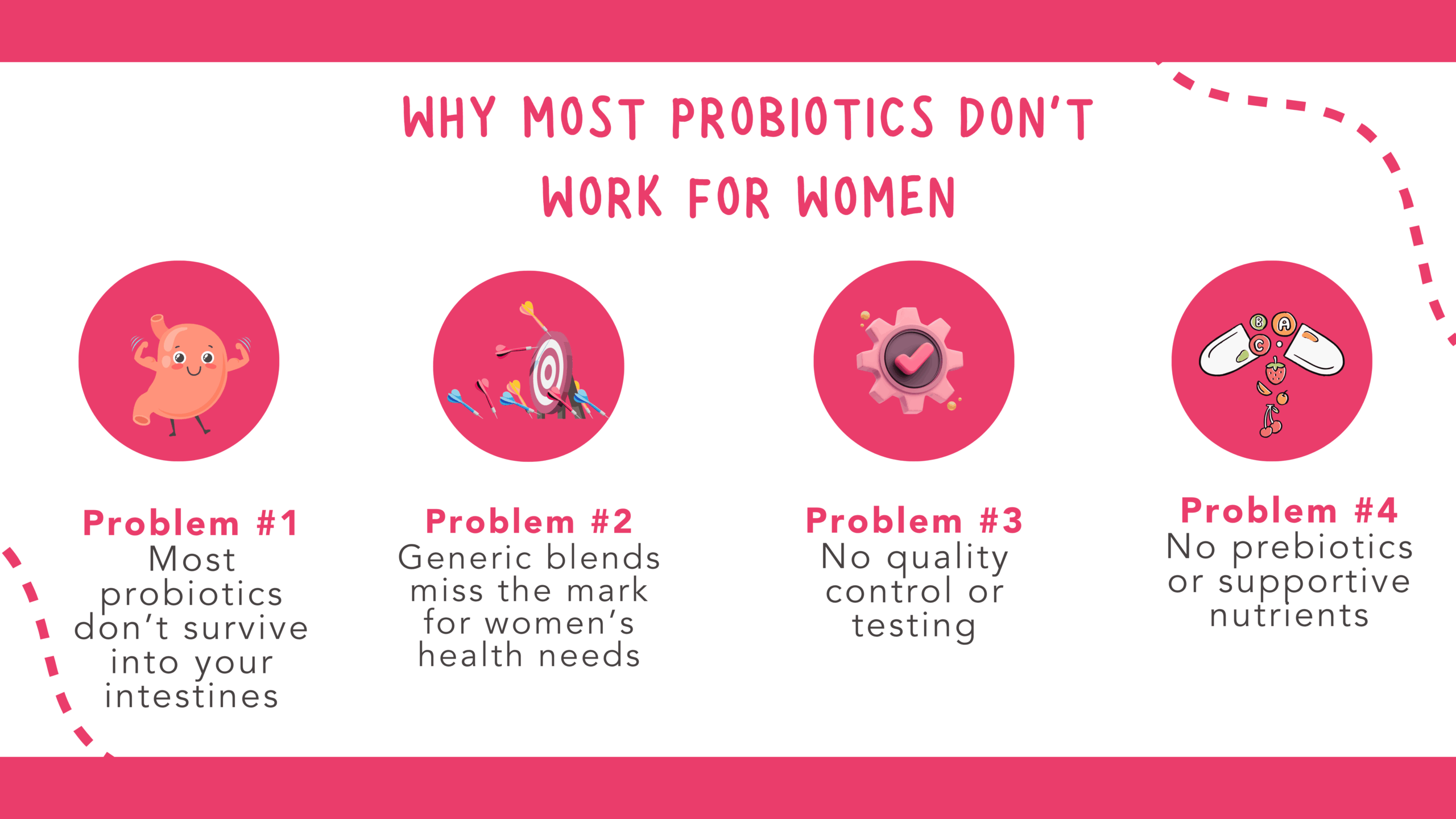
Most probiotics marketed to women don't deliver results because manufacturers use generic formulations, low-quality strains, or designs that don't survive stomach acid long enough to reach the gut where they work. Women's microbiomes differ from men's due to hormonal fluctuations, menstrual cycles, and unique pH levels, yet the probiotic industry treats them as an afterthought.
The problem starts with strain selection. Research published in peer-reviewed journals shows that certain Lactobacillus and Bifidobacterium strains perform better for women's health than others. Generic products often contain strains chosen for cost, not efficacy. Additionally, many probiotics use poor encapsulation technology, meaning the live cultures die before reaching your intestines where they need to work.
Quality matters enormously. A 2023 analysis found that many over-the-counter probiotics contain fewer live cultures than advertised or include bacterial strains that don't match the label. Third-party testing through organizations like NSF International or USP (U.S. Pharmacopeia) helps verify what you're actually getting.
For women specifically, look for products containing clinically studied strains like Lactobacillus rhamnosus GG (shown to support immune and digestive health) and Lactobacillus crispatus (linked to vaginal health). The dose matters too. Effective probiotics typically contain at least 10 billion CFU (colony-forming units), though some women benefit from higher amounts.
Delivery format changes everything. Spore-based probiotics and specially coated capsules protect bacteria through stomach acid better than standard capsules. Some women see better results with fermented foods like yogurt with live cultures, sauerkraut, or kimchi, which deliver probiotics alongside prebiotics that feed beneficial bacteria.
Work with a healthcare provider