# Why Most Probiotics Don't Work for Women (And What Actually Does)
Many women buy probiotics hoping to improve digestion, skin, or mood, only to feel disappointed. The problem isn't their expectations. The problem is that most commercial probiotics aren't formulated to deliver results for women's bodies.
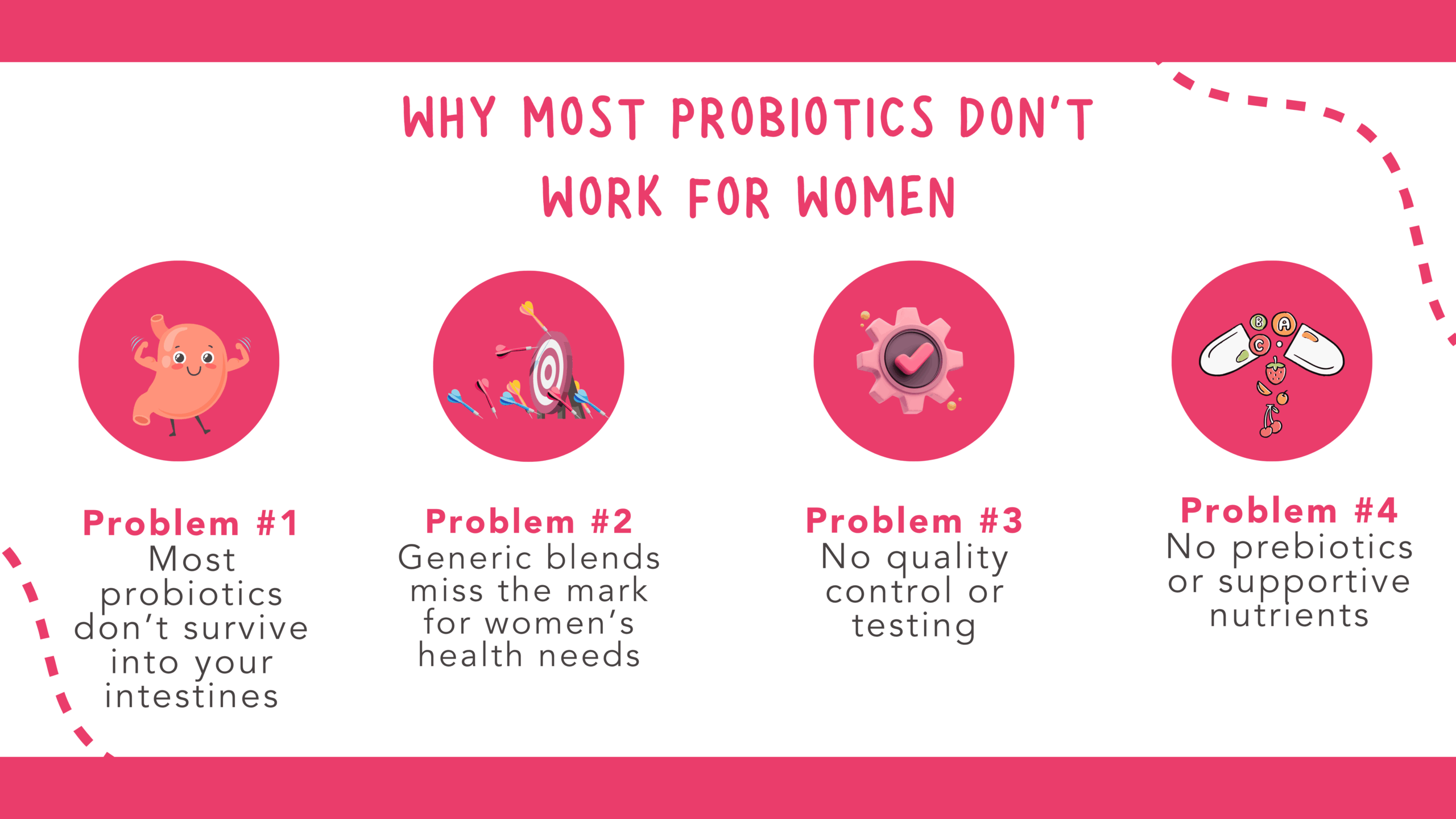
Generic probiotic blends dominate store shelves. These products use low-quality bacterial strains that don't survive stomach acid long enough to reach the intestines where they do their work. Even when they do survive, they often contain strains that don't address the specific bacterial imbalances women experience due to hormonal fluctuations, menstrual cycles, and vaginal health needs.
Women's microbiomes differ from men's in meaningful ways. Estrogen levels change throughout the menstrual cycle, affecting which bacteria thrive in the gut and vagina. Standard probiotics ignore this biology. They're developed with one-size-fits-all thinking instead of accounting for female-specific needs like preventing urinary tract infections, supporting hormonal balance, or maintaining vaginal pH.
Quality matters enormously. Probiotics need to survive packaging, storage, and digestion to work at all. Many over-the-counter options lose potency before you even open the bottle. Look for products that specify CFU (colony-forming units) counts, list individual bacterial strains by name, and explain how they're protected from stomach acid.
The most effective probiotics for women contain strains studied in female-focused research, like Lactobacillus crispatus and Lactobacillus gasseri. These strains target common women's health concerns. They're backed by clinical studies showing real benefits, not just marketing claims. Brands that refrigerate their products and use enteric coating to protect bacteria tend to perform better than shelf-stable alternatives.
Probiotics work