# Finding Answers When Your Child Is Struggling: Introducing Ask Kai
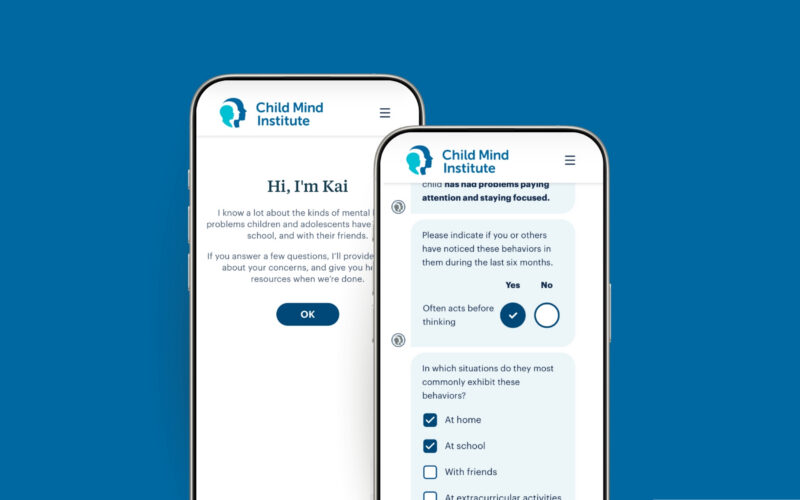
The Child Mind Institute has launched Ask Kai, a conversational symptom checker designed to help parents identify and understand their child's behavioral and developmental concerns. The tool asks parents targeted questions about their child's symptoms, then connects them with relevant resources and guidance.
Ask Kai fills a real gap. Parents often struggle to know whether a child's behavior warrants professional evaluation. A shy child might have social anxiety, or they might simply be temperamentally reserved. A child who struggles with focus could have ADHD, or could be dealing with stress, sleep problems, or learning differences. Without expert guidance, parents second-guess themselves or miss warning signs entirely.
The symptom checker works by gathering information through conversational prompts. Parents describe what they're noticing, and Ask Kai helps them understand patterns and severity. The tool then directs families toward appropriate next steps. This might mean suggesting a conversation with a pediatrician, recommending a mental health evaluation, pointing to parenting resources, or identifying whether a school assessment could help.
Ask Kai doesn't diagnose. It narrows the field of possibilities and helps parents feel less alone in their confusion. Many families delay seeking help because they're unsure whether their child's behavior is actually a problem, or because they don't know where to start. Ask Kai removes that first barrier.
The tool reflects a broader recognition that early identification matters. Many childhood mental health and developmental conditions respond better to intervention when caught early. The American Academy of Pediatrics emphasizes screening for mental health concerns starting in early childhood. Ask Kai makes screening accessible before a parent makes a pediatrician appointment.
Parents can access Ask Kai through the Child Mind Institute website. The tool is free, which removes financial barriers to initial assessment and guidance. This approach acknowledges that not every family has ready access to specialists or