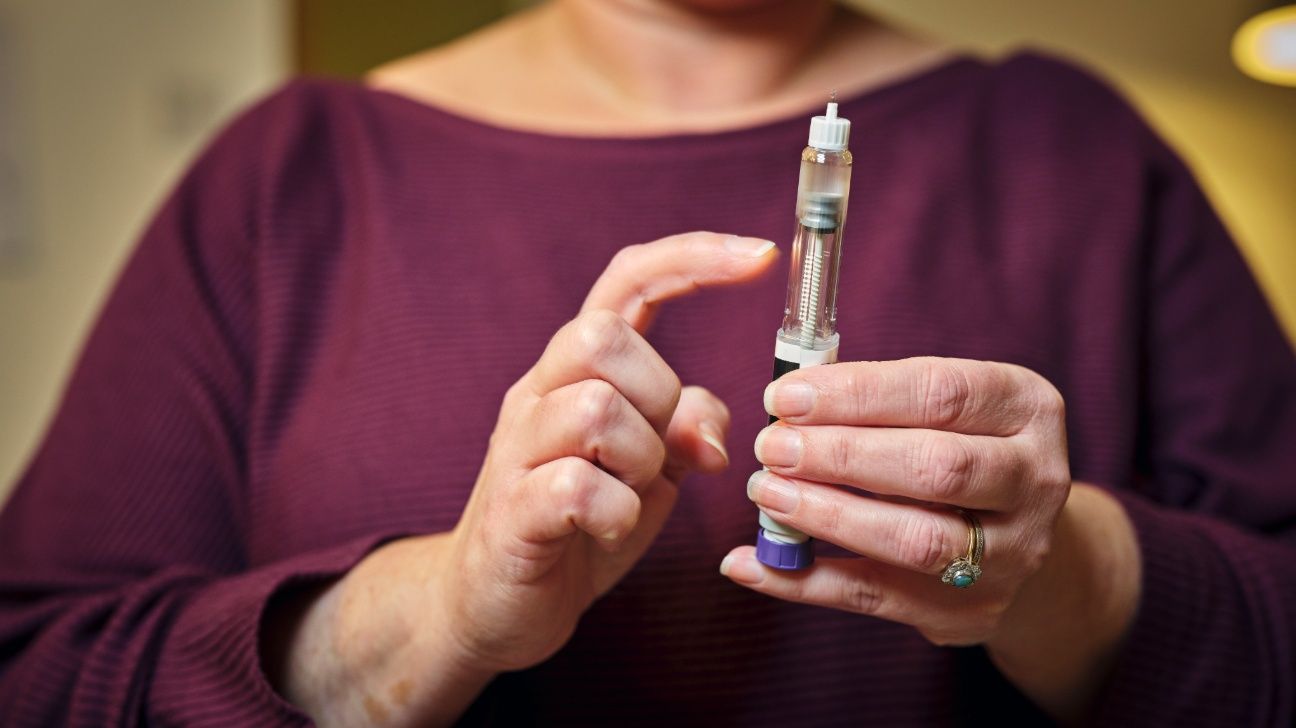
# GLP-1 Medications Help Sustain Lower Calorie Intake Long-Term
New research shows that GLP-1 receptor agonists like Ozempic and Wegovy help people maintain reduced calorie intake for over a year, not just weeks or months.
The study tracked patients on these medications and found they continued eating smaller portions and consuming fewer calories 12 months into treatment. This matters because weight loss typically rebounds when people stop dieting or medication. The extended appetite suppression these drugs provide suggests they may offer more lasting results.
GLP-1 medications work by mimicking a natural hormone that regulates hunger and blood sugar. Originally developed for type 2 diabetes, drugs like semaglutide (Ozempic's active ingredient) and tirzepatide (Zepbound) gained attention for their dramatic weight loss effects in adults.
The research reveals the mechanism behind their success. Rather than requiring constant willpower, users report feeling genuinely less hungry. This biological shift allows them to sustain lower food intake without the constant deprivation that dooms traditional diets.
Parents should know these medications remain approved only for adults. The FDA has not authorized them for children or teens. However, researchers are studying their safety and effectiveness in younger populations, given rising childhood obesity rates.
For families, this research highlights a shift in how obesity is treated. Instead of relying solely on behavior change and willpower, medical professionals can now offer pharmaceutical support that addresses the hunger signals driving overeating.
Cost remains a barrier. Insurance coverage varies widely. Ozempic costs around $900 per month without insurance. Wegovy runs similarly high, though some manufacturers offer patient assistance programs.
The longer-term benefits documented in this research could reshape weight management conversations. Success depends on consistent use. When patients stop taking GLP-1s, appetite often returns and weight