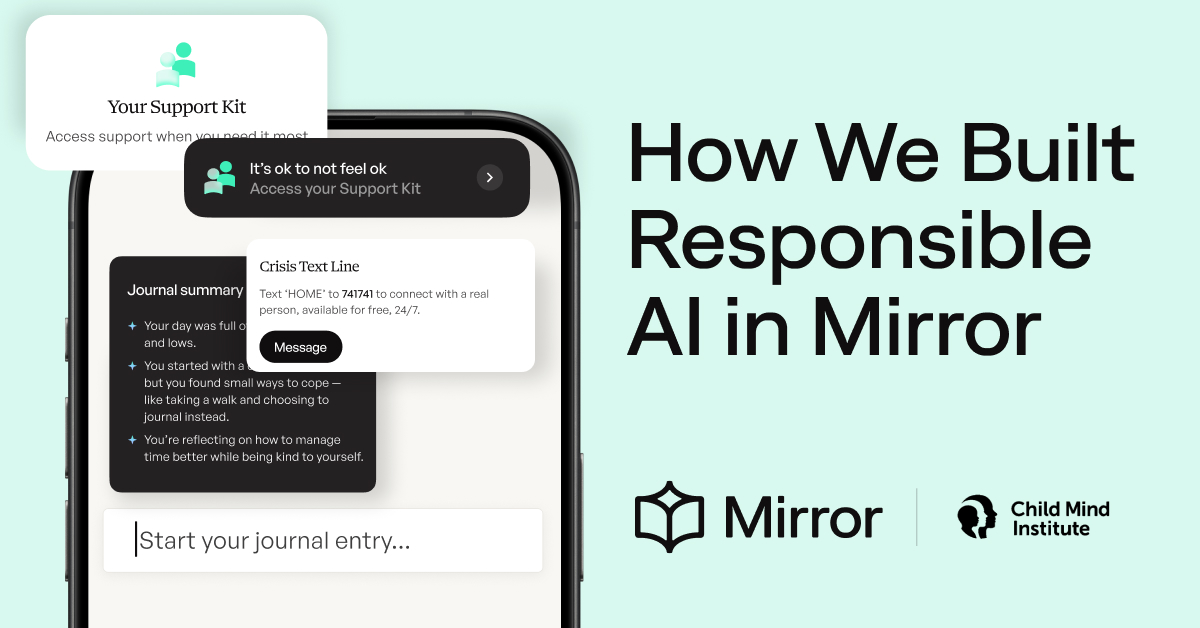
The Child Mind Institute created Mirror, a digital journaling app designed with ethics at its center. Rather than building another mental health technology, the team focused on one core question: how can AI responsibly support vulnerable users and guide them toward real human connection.
Mirror asks young people to share their deepest thoughts and struggles through journaling. The developers understood that this kind of intimate disclosure demands protection. They built the app around the principle that technology should enhance human relationships, not replace them.
The Child Mind Institute is a respected nonprofit focused on child and adolescent mental health research and treatment. Their approach to Mirror reflects growing concern in the mental health tech space about how algorithms handle sensitive information from young users.
The key ethical challenge Mirror tackled involves data privacy and appropriate AI boundaries. Rather than using journaling entries to train commercial algorithms or sell user data, Mirror keeps entries private. The app's AI features support reflection and self-awareness without claiming to diagnose or treat mental health conditions.
This distinction matters. Many mental health apps blur the line between wellness tools and medical intervention. Some use AI to flag concerning content but then leave teenagers without clear next steps. Mirror instead positions its technology as a journaling companion that encourages young people to talk with real therapists, counselors, or trusted adults.
Parents considering digital mental health tools should ask similar questions about any app their teen uses. Who owns the data? Does the app claim to treat mental illness, or does it support wellbeing? Does it push users toward professional help when needed?
The Child Mind Institute's approach suggests that responsible AI in youth mental health means building tools that understand their limits. Technology can help young people process emotions and recognize patterns in their thinking. But algorithms cannot replace the judgment, warmth, and adaptability of human care.
For families navigating mental health challenges, Mirror represents one model of responsible design. It assumes that teens benefit from journaling support, but not at the cost