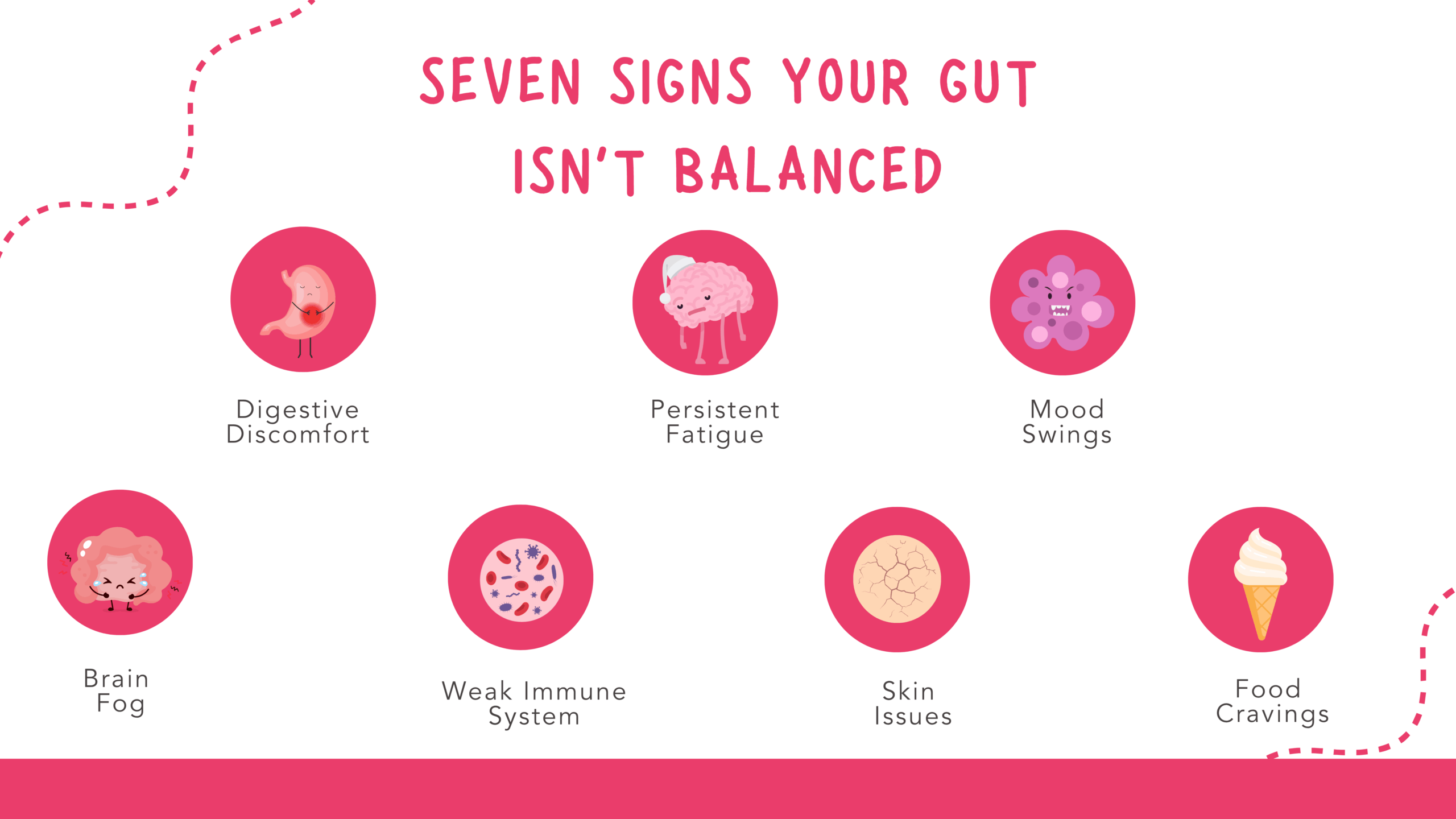
# 7 Signs Your Gut May Be Out of Balance: What Parents Need to Know
Your child complains of stomach pain before school. Your teenager breaks out in hives for no reason. Your toddler swings from happy to tantrum in minutes. Parents often search for answers in the usual places: allergies, behavioral issues, hormones. But research increasingly points to one overlooked culprit: gut health.
The gut microbiome—the trillions of bacteria living in your digestive system—influences far more than digestion. It affects mood, skin, energy, immune function, and behavior. When this delicate ecosystem falls out of balance, children and teens show recognizable signs parents should know.
Digestive complaints top the list. Chronic bloating, constipation, diarrhea, or gas that persists for weeks suggests dysbiosis, an imbalance of gut bacteria. These aren't minor annoyances. A child experiencing regular stomach pain misses school. A teen dealing with chronic bloating avoids social situations. These symptoms warrant attention from your pediatrician, who can rule out celiac disease, food allergies, or inflammatory bowel conditions before exploring gut microbiome support.
Skin problems often reflect gut issues. Eczema, acne, and unexplained rashes sometimes improve when gut health improves. The connection works through the "gut-skin axis." When harmful bacteria outnumber beneficial ones, intestinal permeability increases. This allows bacterial endotoxins to enter the bloodstream, triggering inflammation that shows up on skin. Parents treating persistent breakouts or eczema with topical creams alone may miss the root cause.
Mood changes and behavioral shifts can signal gut imbalance. The gut produces roughly 90 percent of the body's serotonin, the neurotransmitter that regulates mood and anxiety. When gut bacteria decline, serotonin production drops. Your previously even-tempered child becomes irritable. Your anxious teen's symptoms worsen. Some research suggests certain probiotics may support mood, though evidence remains developing.
Food sensitivities emerge or intensify with dysbiosis. A child who previously ate dairy without issue suddenly develops bloating. A teen who loved wheat now experiences fatigue after eating bread. Dysbiosis can increase intestinal permeability, allowing larger food particles to trigger immune responses.
Energy crashes and brain fog represent another sign. Poor gut health impairs nutrient absorption. Your child lacks iron, B12, or magnesium despite eating well. The result: persistent tiredness, difficulty concentrating, poor school performance.
Frequent infections suggest weakened gut immunity. Since roughly 70 percent of immune cells live in the gut, dysbiosis compromises the body's defense system. Your child catches every cold. Ear infections recur despite antibiotics.
Sleep disturbances often accompany gut imbalance. Dysbiosis affects melatonin production and increases nighttime inflammation, making sleep difficult or restless.
What parents can do starts with observation. Track symptoms alongside diet, stress, and activity for two weeks. Share this log with your pediatrician. Support gut health through whole foods, fermented options like yogurt or sauerkraut, adequate fiber, and reduced processed foods. Your doctor may recommend specific probiotics or a food elimination diet to identify triggers.
Gut health isn't fringe wellness talk anymore. It's recognized medicine. When your child feels persistently "off," suspect the gut. Work with your pediatrician to investigate. Healing the microbiome often brings relief that medications alone cannot achieve.