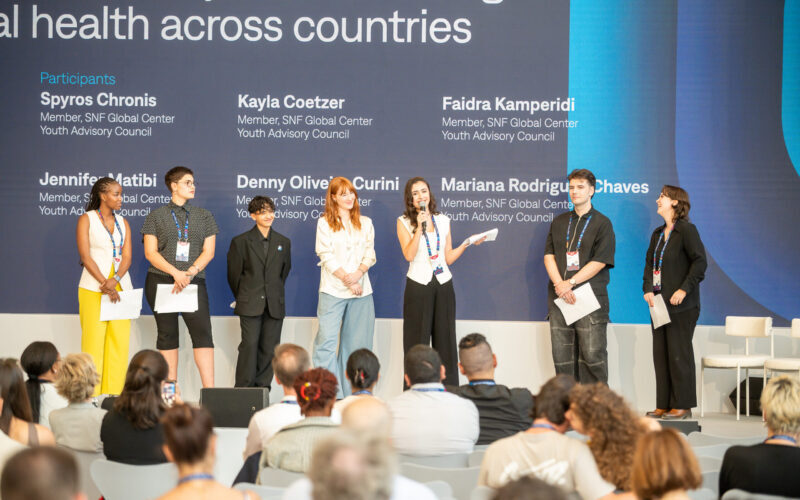
# Young Advisors Shape Global Conversations on Youth Mental Health and Digital Innovation
The SNF Global Center at the Child Mind Institute brought together young people as active participants in shaping international dialogue around adolescent mental health, digital technology, and community solutions. The Global Youth Advisory Council convened at SNF Nostos 2026, marking a shift toward including teen voices in the research and policy conversations that directly affect them.
Across three major panel discussions, youth advisors engaged with experts on cross-country collaborations, digital innovation in mental health, and community-led approaches to supporting adolescents. This model reflects a growing recognition in the mental health field that teens themselves hold essential insights about their own wellbeing. Rather than treating young people as passive subjects of research, the Child Mind Institute positioned them as contributors to solutions.
The Child Mind Institute, a leading nonprofit research organization based in New York, has long focused on understanding and treating mental health and learning disorders in children. Their SNF Global Center specifically works on international initiatives. The SNF Nostos 2026 gathering appears designed to create space where youth perspectives inform policy and practice across different countries and cultures.
The three-panel structure suggests the scope of topics addressed. Cross-country collaborations likely examined how different nations approach youth mental health, what barriers exist to sharing best practices, and how young people experience mental health support differently depending on where they live. Digital innovation panels probably explored how technology shapes adolescent stress, social connection, and access to mental health resources, with youth advisors offering real experience using apps, social media, and telehealth tools. Community-led approaches likely emphasized how young people want to be involved in designing programs and policies that serve them.
This advisory model has roots in youth participatory action research, a methodology recognized by organizations like the American Psychological Association as valuable for creating interventions that actually work for teens. When young people help design mental health initiatives, those programs tend to have better uptake and effectiveness because they address real problems in language and formats that resonate with teens.
The framing of this event, "From Preparation to Purpose," suggests the Child Mind Institute deliberately trained these youth advisors before the conference. Preparation might have included workshops on research literacy, policy basics, and how to communicate their experiences effectively to adult professionals. Purpose signals the expectation that their input will translate into concrete changes in how global organizations approach youth mental health.
Parents watching this development may find it encouraging. When major research institutions and global conveners invest in hearing directly from teens about what they need, family-centered approaches to mental health improve. Adolescents often feel unheard or misunderstood by adults. Formal channels like youth advisory councils give teens legitimate platforms to shape the conversation, which can shift institutional priorities toward what research shows actually supports teen wellbeing: autonomy, connection, and meaningful participation in decisions affecting their lives.
The SNF Nostos 2026 event signals that youth mental health conversations are moving beyond expert-only rooms toward collaborative spaces where the people most affected have real voice.