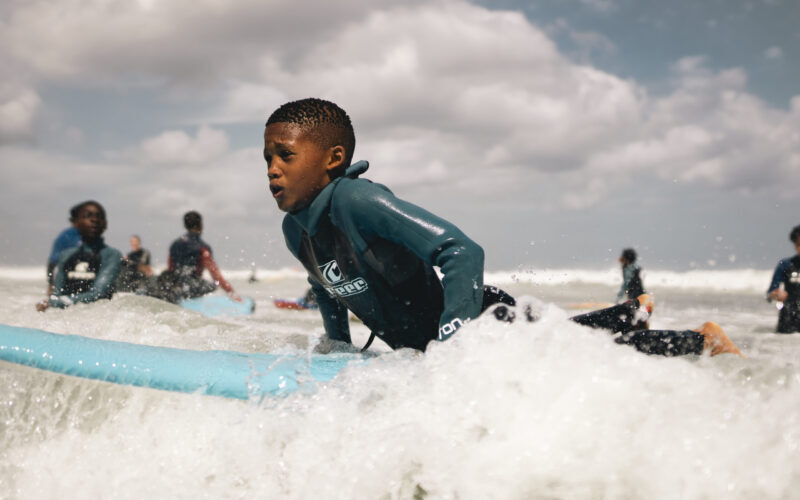
Wave for Change's track record speaks loudly enough that we should stop treating surf therapy as a curiosity and start treating it as urgent infrastructure. Since 2009, this South Africa-based organization has helped more than 10,000 adolescents gain coping skills through its program. The results matter: young people in high-stress environments learn emotional regulation, build social networks, and develop resilience. Yet this success story remains confined to hubs in the Western and Eastern Cape and Cape Town, while approximately 90 percent of the world's adolescents live in low- and middle-income countries with virtually no access to mental health services at all.
Consider what these young people face. Research W4C conducted found that adolescent participants aged 10-16 reported experiencing between 6-8 adverse events every year, including violence and abuse. These repeated exposures to trauma create toxic stress—an ongoing state without respite—that leads to anxiety, depression, substance misuse, and even physical health conditions like heart disease in adulthood. The mental health workforce crisis is real: there simply aren't enough trained coaches and facilitators to deliver the structured, play-based sessions that work.
This is where the partnership between Wave for Change and the Stavros Niarchos Foundation Global Center at the Child Mind Institute becomes critical. The Take 5 model—a framework W4C designed that has already been adapted by organizations including UNICEF—distills surf therapy's essential components into something replicable and culturally appropriate. Context-specific training materials are expected to be piloted later in the year in South Africa. But "later in the year" feels like slow motion when thousands of adolescents are waiting.
The coaches delivering these programs, aged 18-25, are themselves trusted community members who listen with care and can escalate concerns to child protection teams. W4C is already partnering with over 70 referral organizations annually and working with the Department of Cultural Affairs and Sport to train additional mentors. These partnerships demonstrate that the infrastructure for scaling exists—we simply need to accelerate it.
The evidence is there. The model works. The workforce gaps have been identified. What's missing is the urgency that matches the scale of need. Approximately 90 percent of the world's adolescents deserve access to what W4C has proven possible. Until surf therapy and similar low-intensity, culturally relevant approaches move from pilot phase to standard practice in mental health systems globally, we're asking millions of young people to wait while we deliberate. That's unacceptable.