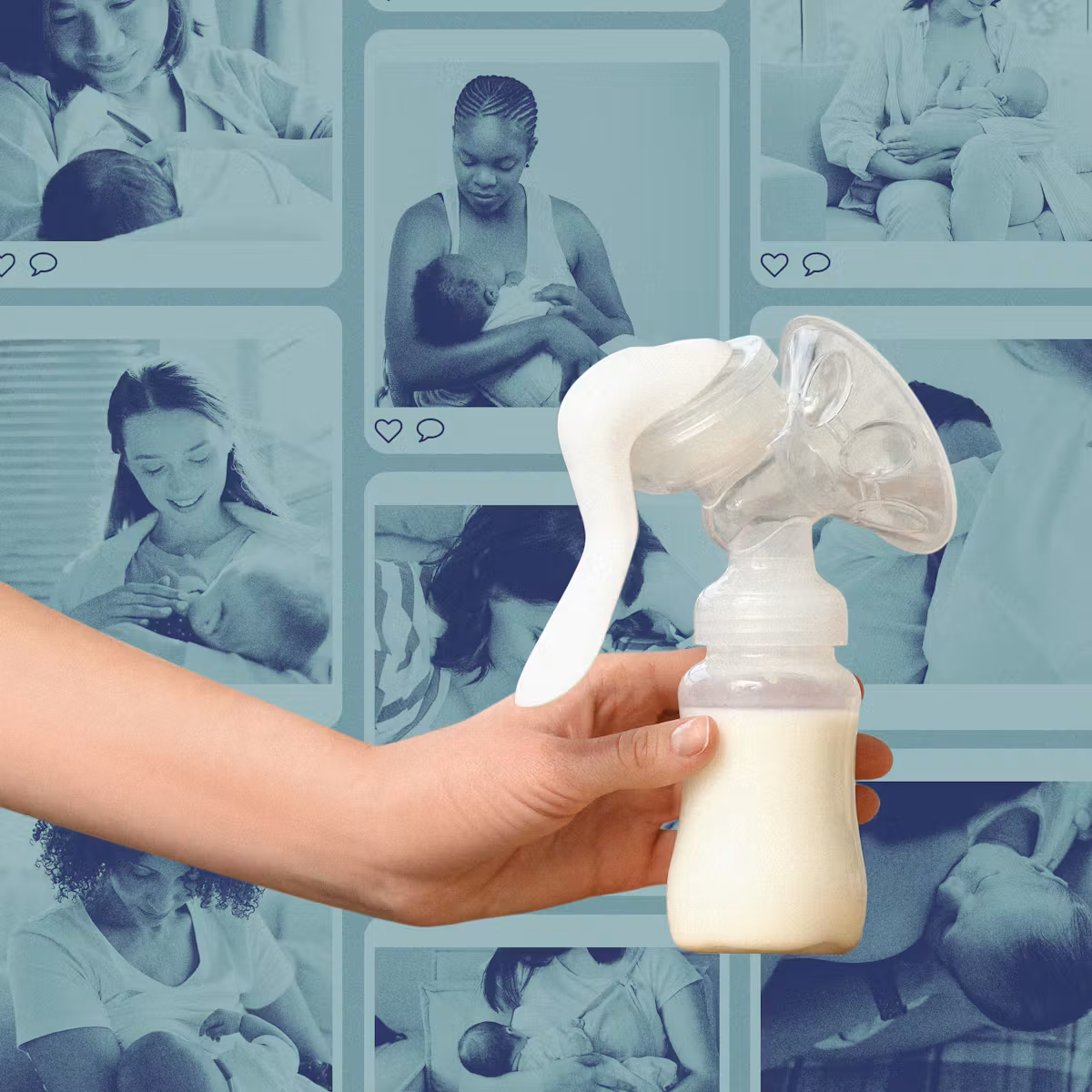
Noelle wanted to pump after her daughter was born, but social media ads and comments praising breastfeeding made her feel she had no choice. She eventually switched to nursing, and the constant touching and stimulation triggered postpartum depression.
Michelle Markowitz, LMSW, a licensed social worker specializing in perinatal mental health, says the pressure to breastfeed starts during pregnancy. "From the time someone gets pregnant, we are inundated with messages from friends, family, social media, society, and strangers about what is best for the baby," Markowitz says. "And, while there has been some movement in this space, society still tells us that breast is best."
When mothers cannot meet that standard, guilt and anger can spiral into depression. Markowitz notes there is little research on the relationship between breastfeeding and postpartum depression. Some studies suggest a bidirectional link. Mothers with depressive symptoms may struggle to breastfeed, and struggling with breastfeeding can trigger depression.
To tell the difference between normal breastfeeding difficulty and PPD, Markowitz recommends looking at the impact on daily functioning. Ask yourself: Does your mood change based on whether the baby had a good feed? Does your self-worth depend on successful breastfeeding? Symptoms of PPD include crying, lack of interest in activities, feeling hopeless, lethargy, and changes in eating or sleeping.
Markowitz suggests naming your feelings about breastfeeding and acknowledging them. Formula can be critical for babies who cannot latch or mothers who cannot lactate. If stopping breastfeeding improves a mother's mental health, that benefits the baby too. "We can hold both," Markowitz says.
Peer support from other mothers who faced similar struggles helped Markowitz most. She recommends talking to someone you trust. The National Maternal Mental Health Hotline and Postpartum Support International offer resources.
Noelle found a therapist who specializes in PPD. "Getting that help and being able to discuss those emotions and to discuss the way it made me feel — that was really a turning point for me," she says.