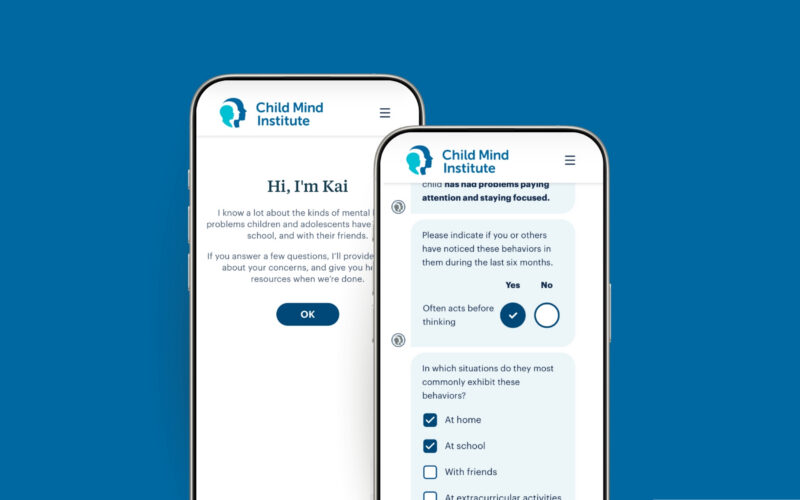
# Finding Answers When Your Child Is Struggling: Introducing Ask Kai
The Child Mind Institute has launched Ask Kai, a conversational symptom checker designed to help parents and caregivers understand troubling behavior in their children and connect them with appropriate support.
Ask Kai works like a guided conversation. Parents describe what they're observing, whether it's anxiety, difficulty focusing, emotional outbursts, or social struggles. The tool asks clarifying questions and generates information about what might be happening, then points families toward relevant resources and next steps.
This fills a real gap. Many parents notice something isn't quite right but don't know whether to worry, when to seek professional help, or what to call what they're seeing. A child who won't attend school might have separation anxiety, school phobia, depression, or something else entirely. A child who fidgets and interrupts could have ADHD or simply be energetic and bored. Without guidance, parents often delay getting help or pursue the wrong interventions.
Ask Kai doesn't diagnose. It educates and directs. The tool is built on clinical expertise from the Child Mind Institute, which has spent nearly two decades researching childhood mental health and learning disorders. Parents can explore symptoms across categories including anxiety, depression, attention and learning challenges, behavioral concerns, and developmental questions.
The resource addresses a widespread problem. According to the National Institute of Mental Health, about one in five children experiences mental health challenges in a given year, yet many go undiagnosed and untreated. Barriers include not recognizing symptoms, not knowing where to start, and not understanding whether professional evaluation is necessary.
Practical features help parents move from confusion to action. Ask Kai provides explanations of what different behaviors might indicate, information about when to seek evaluation, guidance on finding child psychologists or psychiatrists, and educational resources about specific conditions.
Parents who use Ask