# How the Child Mind Institute Built Ethical AI Into a Teen Journaling App
The Child Mind Institute released Mirror, a digital journaling tool designed specifically for young people navigating mental health challenges. But this app differs from typical mental health software in one fundamental way: the developers centered their entire design around a single ethical question. When teens share their darkest thoughts with an algorithm, how does technology actually serve them best?
The answer matters. Millions of young people now use AI-powered mental health tools. Many lack transparency about how algorithms process vulnerable information. Many make promises they cannot keep about mental health support. Mirror takes a different approach.
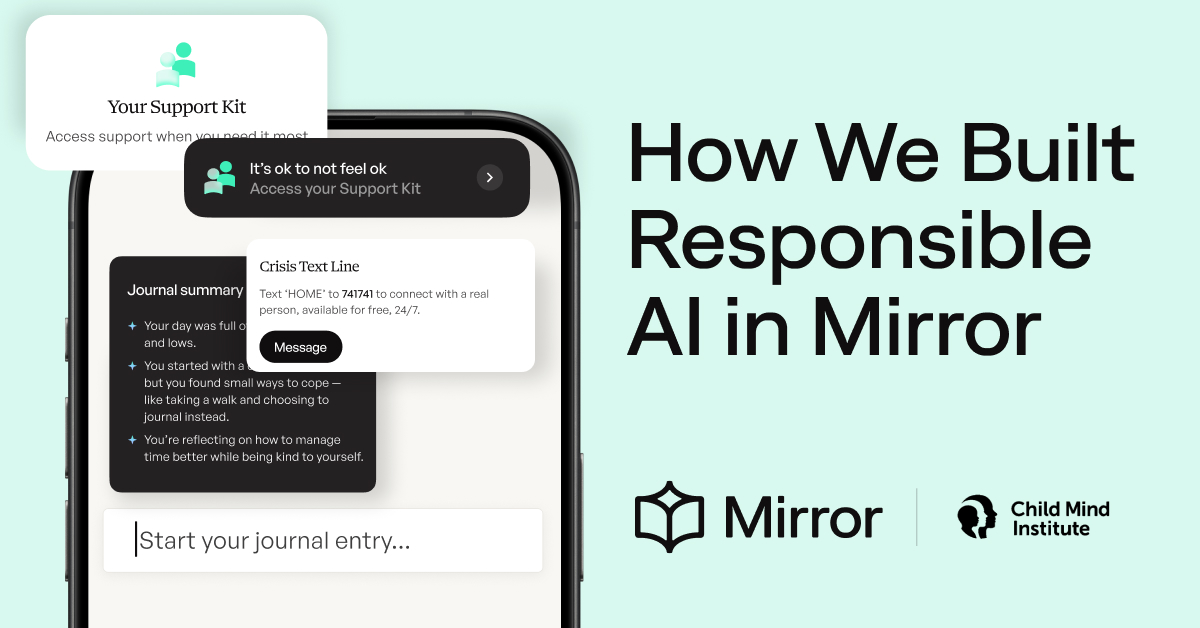
The Child Mind Institute, a nonprofit focused on child psychology and behavior, built Mirror with guardrails from the start. Rather than positioning AI as a replacement for human care, the team designed the technology to strengthen connections to real therapists and counselors. The app functions as a bridge, not a destination.
This philosophy reflects current research on adolescent mental health. Teens benefit from digital tools that supplement human relationships, not replace them. A 2023 study published in JAMA Psychiatry found that apps paired with professional support showed measurable improvements in depression and anxiety screening scores. Apps used alone showed minimal benefit.
Mirror operates on several specific principles. First, the app collects the minimum data necessary. It does not retain personal information longer than required. Second, the developers conducted transparency audits. Parents and teens understand exactly how the AI processes journal entries. Third, safeguarding features alert designated adults if a teen expresses suicidal thoughts or severe self-harm intent.
The Child Mind Institute also addressed a common gap in mental health tech: bias. AI systems trained primarily on adult mental health data often misinterpret teen experiences. A comment that reflects normal adolescent angst might trigger false alarms. Conversely, genuine warning signs might get missed if the algorithm has limited exposure to how teens actually communicate. Mirror's developers used diverse datasets and tested extensively with teenage users during development.
Trust becomes the foundation for whether any mental health app actually works. Teens must believe their entries stay private. They must understand what the algorithm does with their words. They must know that a human being, not just code, cares about their wellbeing. Without trust, they stop using the tool. Without use, no benefit emerges.
The launch of Mirror reflects a broader shift in how responsible tech companies approach child mental health. The American Academy of Pediatrics and the American Psychological Association both emphasize that digital tools for mental health must center ethical design, transparency, and human oversight. Mirror demonstrates that meeting these standards does not require abandoning innovation.
Parents considering journaling apps for their teens should ask specific questions. Does the company explain how AI processes information? Can teens control what data gets shared? Are there clear pathways to professional help? Does the company conduct regular safety audits? Mirror's developers answer these questions directly.
The real measure of responsible AI in mental health lies not in impressive algorithms but in outcomes. Does the tool help teens feel less alone? Does it reduce time to professional care? Does it respect their privacy while protecting their safety? The Child Mind Institute designed Mirror to answer yes to all three. That focus on actual benefit, not just innovation, sets a standard worth watching across the mental health tech industry.